Advertisement










Private equity has played a significant role in shaping Indi...
In today’s real estate landscape, fitness is often treated...
In this episode of Prop Personalities, we sit down with Hars...
Luxury real estate is one of the most talked-about segments ...
Welcome to Prop Personalities by Prop News Time - a podcast ...
India is setting up a national container shipping company, Bharat Container Line, through collaboration between state-owned entities Shipping Corporation of India (SCI), Container Corporation of India (CONCOR), and Sagarmala Finance Corporation, alongside three key ports: Jawaharlal Nehru, Chennai, and V.O. Chidambaranar. The move aims to reduce reliance on foreign carriers, which handle nearly all of India's export-import container trade, costing about INR 6 lakh crore (USD 75 billion) annually. Experts highlight challenges in acquiring ships, securing terminal slots, and offering competitive services, underlining the need for commercial efficiency alongside strategic objectives.
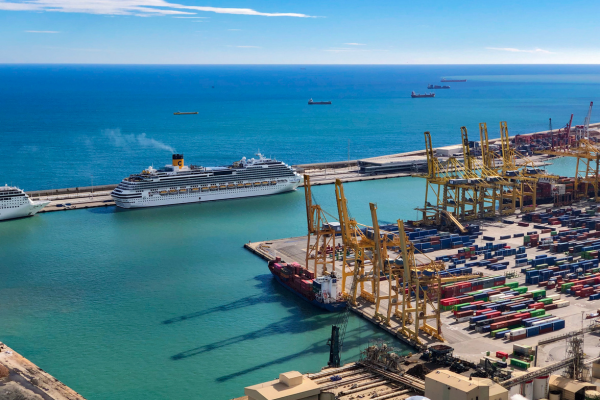
State-owned firms and ports in India are joining forces to establish Bharat Container Line, a national container shipping company designed to reduce the country's dependence on foreign carriers for export-import cargo. This initiative aligns with the government's push for self-reliance in key logistics sectors. Advertisement


Shipping Corporation of India (SCI) and Container Corporation of India (CONCOR), both Navratna public sector companies, are expected to hold 30% equity each in the venture. Sagarmala Finance Corporation, a maritime-focused non-banking financial company, will take 20%. Jawaharlal Nehru Port Authority, India's largest state-owned container gateway, will have a 10% stake, while Chennai and V.O. Chidambaranar Port Authorities will share the remaining 10%. These ports will also serve as operational partners to boost cargo volumes at their terminals. The partners plan to formalize the collaboration through a memorandum of understanding soon.
India currently pays about INR 6 lakh crore (USD 75 billion) annually to foreign shipping companies, almost equal to the size of the country's defense budget, as only 5% of export-import cargo moves on Indian ships. Global carriers, including Mediterranean Shipping Company, CMA CGM, Maersk, Hapag Lloyd, Evergreen, Wan Hai, Yang Ming, COSCO, Ocean Network Express, and ZIM, dominate nearly 99% of container trade by volume.
The pandemic highlighted vulnerabilities in relying on foreign carriers, with freight rates spiking and container shortages affecting exporters. Geopolitical events, including the Red Sea crisis and Middle East conflicts, along with tariff actions from countries like the United States, further stressed the need for a national line.
Experts warn that establishing Bharat Container Line will be challenging. Liner services require an initial fleet of 8-9 ships for weekly operations on routes such as India-Far East and India-Europe. Acquiring these vessels is difficult, as the market for second-hand container ships is limited and expensive. SCI has been seeking such ships for two years without success.
Operational challenges extend to securing terminal slots, especially at west coast ports running near full capacity. Industry executives emphasize that the company must operate commercially rather than rely solely on strategic or patriotic motives. Success will depend on providing competitive freight rates, efficient service, and cost-effective operations for exporters and importers.
While the initiative has strong strategic logic, the ability to compete in a global market with established foreign carriers will define Bharat Container Line's long-term impact.

5th Jun, 2025

25th May, 2023

11th May, 2023

27th Apr, 2023
Advertisement





 Facebook
 Whatsapp
