Advertisement










Private equity has played a significant role in shaping Indi...
In today’s real estate landscape, fitness is often treated...
In this episode of Prop Personalities, we sit down with Hars...
Luxury real estate is one of the most talked-about segments ...
Welcome to Prop Personalities by Prop News Time - a podcast ...
Delhi Chief Minister Rekha Gupta has set out a detailed development roadmap focusing on public transport electrification, Metro expansion and infrastructure upgrades. The plan aims to convert the city's entire public bus fleet to electric over the next three years while expanding the Metro network to around 500 km. Higher capital expenditure has been earmarked for transport and civic projects, alongside initiatives in health, education, safety and welfare. The roadmap positions public mobility and infrastructure as central to Delhi's long-term urban development strategy.
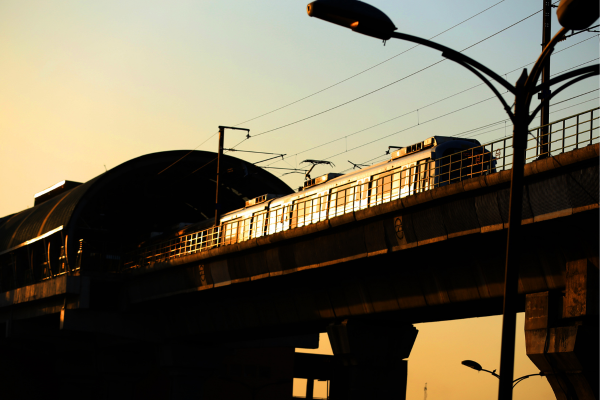
The Delhi government has laid out a structured roadmap to strengthen public transport and urban infrastructure, with a clear focus on electric mobility and Metro expansion. Chief Minister Rekha Gupta, addressing a state-level programme during the past week, said the city is moving steadily towards becoming a developed capital under the national Vision 2047 framework. Public transport, she said, remains a priority area due to its direct impact on mobility, pollution levels and daily commuting needs. Advertisement


A key pillar of the plan is the complete electrification of Delhi's public bus fleet over the next three years. Around 11,000 electric buses are proposed to be inducted in a phased manner, supported by new charging infrastructure and depot upgrades across the city. The government indicated that this transition is expected to reduce emissions while improving service reliability and passenger experience. Delhi already operates one of the largest electric bus fleets in the country, and the latest roadmap builds on earlier pilot deployments.
Alongside buses, the Metro network is set for a major expansion. The government has reiterated its target of increasing Delhi Metro's operational length to nearly 500 km. Budgetary allocation for Metro projects has been increased, reflecting the role of rail-based transit in handling long-distance and high-density travel. The expansion is also expected to improve connectivity between peripheral areas and employment hubs, easing pressure on road networks.
To support these mobility goals, capital expenditure for the current financial cycle has been significantly enhanced. Funds are being directed towards roads, flyovers, underpasses and elevated corridors to address congestion bottlenecks. The plan also includes better last-mile connectivity through integration of e-buses, e-autos and e-taxis, ensuring smoother access to Metro stations and key transit points.
Urban safety and public infrastructure form another component of the roadmap. The government is rolling out smart LED street lighting and an expanded CCTV network under the Safe City initiative. These measures are intended to improve visibility, road safety and surveillance across residential and commercial zones.
In healthcare, the government is advancing its three-layer approach of advanced, affordable and accessible services. This includes new hospital blocks, critical care units and diagnostic facilities, adding to the existing network of mohalla clinics and public hospitals. The focus remains on strengthening capacity rather than replacing current systems.
Education continues to receive a substantial share of the state budget, with investments aimed at upgrading government schools, regulating private school fee hikes and developing a new education hub in Narela. Welfare initiatives such as subsidised meal programmes and targeted funding for slum infrastructure upgrades have also been outlined as part of the broader development agenda.

5th Jun, 2025

25th May, 2023

11th May, 2023

27th Apr, 2023
Advertisement





 Facebook
 Whatsapp
