Advertisement










Private equity has played a significant role in shaping Indi...
In today’s real estate landscape, fitness is often treated...
In this episode of Prop Personalities, we sit down with Hars...
Luxury real estate is one of the most talked-about segments ...
Welcome to Prop Personalities by Prop News Time - a podcast ...
As construction progresses on Delhi Metro's Phase 4 corridors, DMRC has installed nearly 20 kilometres of barricades along work zones, along with around 17 kilometres of LED rope lights and blinkers to improve visibility for motorists and pedestrians. More than 270 trained traffic marshals manage vehicular and heavy machinery movement round the clock. Additional safety measures include road studs, warning signage, dedicated impact protection vehicles, fog lamps, reflective helmets, high visibility jackets, and reinforced concrete crash barriers. The initiatives reflect lessons from past projects and Indian Road Congress standards.
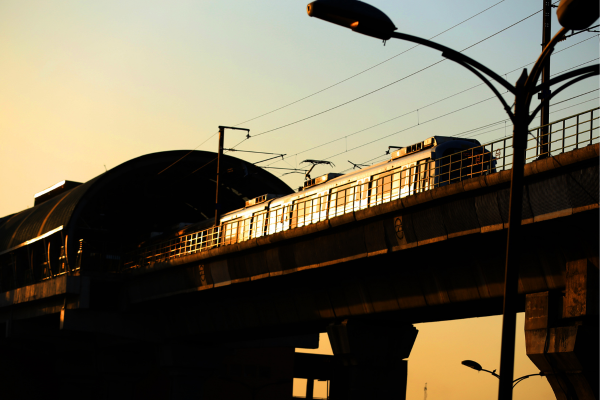
Delhi Metro Rail Corporation (DMRC) has intensified safety measures across Phase 4 construction sites to protect commuters and workers amid large-scale urban infrastructure development. Nearly 20 kilometres of barricades have been installed at elevated and underground corridor work zones. Around 17 kilometres of LED rope lights and blinkers have been added to enhance visibility during nights and foggy conditions, helping drivers and pedestrians identify construction zones more clearly. Advertisement


Over 270 traffic marshals, trained by traffic experts, are deployed round the clock to direct vehicles, coordinate heavy machinery and crane movement, and ensure smooth traffic flow around the work zones. Road studs and clear warning signage indicate diversions and ongoing work to reduce risks for motorists.
DMRC has also introduced dedicated impact protection vehicles capable of withstanding collisions, providing an extra layer of safety during the placement or movement of heavy equipment. To further improve visibility in winter fog, barricades are equipped with fog lamps, while workers use high-visibility jackets and helmets with reflective tapes.
Wherever traffic is diverted, planning is done in close coordination with the Delhi Traffic Police. A three-layer safety system has been implemented, comprising plastic barriers, sand or water-filled drums, and reinforced concrete crash barriers. These barricades are designed to be bottom-heavy and securely anchored to the ground, with individual units fastened together to prevent toppling in strong winds or rain. Concrete crash barriers, made from recycled construction waste and reinforced for added protection, safeguard vehicles from colliding with heavy machinery.
DMRC has incorporated detailed traffic management guidelines in its tender documents, making them binding for contractors. The guidelines are based on previous project experiences and Indian Road Congress norms to maintain uniform safety and quality standards. Despite challenges in executing mass transit construction in congested urban areas, officials report that vehicular and pedestrian movement around Phase 4 sites has remained largely incident-free so far.
Source PTI
FAQ
Q1. What safety measures has DMRC implemented at Phase 4 construction sites?
DMRC has installed nearly 20 kilometres of barricades along elevated and underground corridor work zones and around 17 kilometres of LED rope lights and blinkers to enhance visibility for motorists and pedestrians. Additional measures include road studs, warning signage, reinforced concrete crash barriers, dedicated impact protection vehicles, fog lamps, reflective helmets, and high-visibility jackets for workers.
Q2. How is traffic and construction site management handled?
Over 270 trained traffic marshals are deployed round the clock to manage vehicular movement, coordinate heavy machinery and crane operations, and ensure smooth traffic flow. Traffic diversions and work zone safety are planned in close coordination with the Delhi Traffic Police, and all contractors must follow DMRC's detailed traffic management guidelines included in tender documents.
Q3. What measures protect workers and commuters from collisions or accidents?
Safety is strengthened through a three-layer barricade system: plastic barriers, sand- or water-filled drums, and reinforced concrete crash barriers. Barricades are bottom-heavy, securely anchored, and fastened together to prevent toppling. Dedicated impact protection vehicles offer extra collision protection, while high-visibility jackets, reflective helmets, fog lamps, and road studs further safeguard workers and drivers.
Q4. How does DMRC ensure compliance with safety standards?
All contractors are required to follow strict traffic management and safety norms based on past project experiences and Indian Road Congress standards. This ensures uniform quality, proper barricade placement, and operational discipline across all Phase 4 construction sites.
Q5. What has been the outcome of these measures so far?
Despite the challenges of constructing mass transit corridors in densely populated urban areas, officials report that vehicular and pedestrian movement around Phase 4 sites has remained largely incident-free, reflecting the effectiveness of barricades, lighting, trained marshals, and other safety initiatives.

5th Jun, 2025

25th May, 2023

11th May, 2023

27th Apr, 2023
Advertisement





 Facebook
 Whatsapp
