Advertisement










Private equity has played a significant role in shaping Indi...
In today’s real estate landscape, fitness is often treated...
In this episode of Prop Personalities, we sit down with Hars...
Luxury real estate is one of the most talked-about segments ...
Welcome to Prop Personalities by Prop News Time - a podcast ...
Adani Ports and Special Economic Zone Ltd (APSEZ) has announced a cumulative INR 30,000 crore investment in Vizhinjam International Seaport in Kerala, aiming to expand its capacity from 1 million TEUs to 5.7 million TEUs by 2029. The recently inaugurated second phase alone accounts for INR 16,000 crore, featuring advanced infrastructure and automation. APSEZ credited past and current Kerala political leadership for project continuity. The port's expansion is expected to strengthen India's transshipment capabilities, boost local employment, and enhance maritime trade connectivity with global shipping networks.
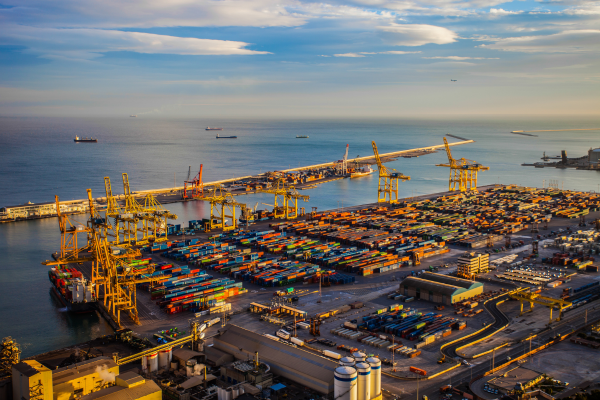
Adani Ports and Special Economic Zone Ltd (APSEZ), which manages the Vizhinjam International Seaport near Thiruvananthapuram, Kerala, has confirmed a total investment of INR 30,000 crore to transform the port into the largest transshipment hub in India and a globally competitive maritime facility. The project is expected to increase the port's handling capacity from 1 million TEUs to 5.7 million TEUs by 2029. Advertisement


The second phase of development, recently inaugurated, represents an investment of INR 16,000 crore. This phase includes advanced automation systems, modern cranes, rail yards, and deeper breakwaters, aimed at improving operational efficiency and allowing the port to handle larger vessels. APSEZ stated that the port will also be India's most technologically advanced, serving as a model for future ports in the country.
APSEZ leadership highlighted that this is the largest single investment by a corporate entity in Kerala. Karan Adani acknowledged the role of the late Kerala Chief Minister Oommen Chandy for initiating the project and providing its early momentum, and praised current Chief Minister Pinarayi Vijayan for ensuring political clarity, administrative discipline, and continued support, which were crucial for executing such a large greenfield project.
The port expansion is expected to generate significant local employment and economic growth while enhancing Kerala's connectivity with international shipping routes. It aligns with India's broader goals to reduce dependency on foreign ports for container transshipment. Previous milestones of the port have already demonstrated its potential, and the expansion will further integrate Vizhinjam into global maritime trade networks.
Source PTI
FAQ
Q1. What investment has APSEZ announced for Vizhinjam International Seaport?
Adani Ports and Special Economic Zone Ltd (APSEZ) has confirmed a total investment of INR 30,000 crore to expand Vizhinjam International Seaport in Kerala. The plan aims to transform it into India's largest transshipment hub, increasing its container handling capacity from 1 million TEUs currently to 5.7 million TEUs by 2029.
Q2. What does the second phase of the project include?
The recently inaugurated second phase alone involves an investment of INR 16,000 crore. It features advanced automation systems, modern cranes, rail yards, and deeper breakwaters. These upgrades are designed to improve operational efficiency, enable handling of larger vessels, and position Vizhinjam as India's most technologically advanced port.
Q3. How has political support influenced the project?
APSEZ credited Kerala's political leadership for ensuring the continuity and execution of the project. The late Chief Minister Oommen Chandy was recognised for initiating the project, while current Chief Minister Pinarayi Vijayan was praised for providing political clarity, administrative discipline, and ongoing support key factors in executing a greenfield port project of this scale.
Q4. What impact is the port expansion expected to have on the local economy?
The expansion is projected to generate substantial local employment opportunities, stimulate economic growth, and boost Kerala's maritime infrastructure. It is also expected to strengthen India's transshipment capabilities, reducing reliance on foreign ports for container handling and integrating Vizhinjam more deeply into global shipping networks.
Q5. How does this expansion align with India's broader maritime goals?
The project supports India's strategy to enhance domestic transshipment capacity and reduce dependence on ports in Sri Lanka, Singapore, and other countries. By expanding Vizhinjam into a world-class hub, India can handle more international shipping traffic, improve trade connectivity, and compete with global ports in efficiency and technological capabilities.
Q6. Why is this investment significant in Kerala's context?
APSEZ's INR 30,000 crore commitment represents the largest single corporate investment in Kerala. Beyond infrastructure development, it signals investor confidence in the state's policy environment and highlights Kerala's potential to emerge as a strategic maritime gateway for India.
Q7. What are the expected technological and operational advancements?
The port will incorporate automated container handling, high-capacity cranes, and modern rail-linked yards. The breakwaters are being deepened to accommodate ultra-large container vessels. These measures aim to reduce turnaround times, increase throughput, and ensure Vizhinjam meets global standards for transshipment operations.

5th Jun, 2025

25th May, 2023

11th May, 2023

27th Apr, 2023
Advertisement





 Facebook
 Whatsapp
