Advertisement










Private equity has played a significant role in shaping Indi...
In today’s real estate landscape, fitness is often treated...
In this episode of Prop Personalities, we sit down with Hars...
Luxury real estate is one of the most talked-about segments ...
Welcome to Prop Personalities by Prop News Time - a podcast ...
NHPC has started partial commercial operations at the 2,000 MW Subansiri Lower Hydroelectric Project on the Assam & Arunachal Pradesh border with the commissioning of one 250 MW unit. The project, India's largest hydropower facility, has faced long delays and sharp cost escalation since construction began in 2005. Designed as a run-of-the-river scheme, it will eventually generate over 7,400 million units of renewable power annually. Phased commissioning of the remaining units is planned, with full operations expected by 2026-27.
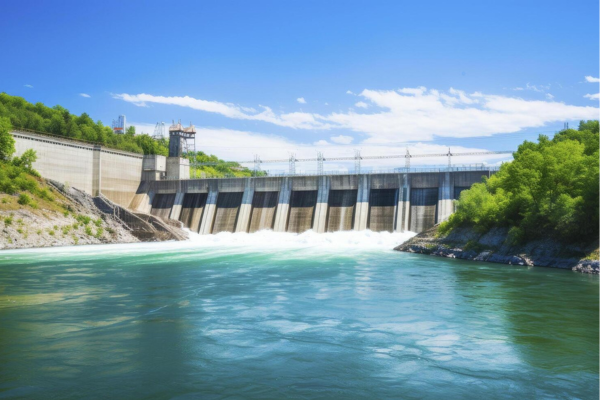
NHPC has begun partial commercial production at its 2,000 MW Subansiri Lower Hydroelectric Project located on the Assam-Arunachal Pradesh border, marking a key milestone more than a decade after its original completion timeline. The state-owned power producer commissioned Unit-2 of the project, signalling the start of phased operations at what is India's largest hydropower facility. Advertisement


The inauguration of Unit-2 was carried out virtually by Union Power Minister Manohar Lal from New Delhi. NHPC said the commissioning marked steady progress towards making the entire project operational. The Subansiri Lower project consists of eight units of 250 MW each, and the remaining units are scheduled to begin commercial production in stages over the coming period.
The power minister described the commissioning as a major achievement in NHPC's journey, noting that it reflected years of sustained effort and coordination. He also highlighted the project's role in strengthening clean and sustainable energy generation, supporting economic growth in the Northeast, reinforcing the national power grid and contributing to India's Net Zero ambitions.
NHPC stated that with Unit-2 now operational, the project is moving towards commissioning three additional 250 MW units shortly. The remaining four units are planned to be commissioned in a phased manner during 2026-27. Once fully operational, the Subansiri project is expected to make a substantial contribution to India's renewable energy capacity and improve grid stability across regions.
Designed as a run-of-the-river project with limited pondage, the facility diverts water through eight head race tunnels to generate an estimated 7,422 million units of renewable electricity annually. Apart from supplying power to 16 beneficiary states, the project will provide free power to Arunachal Pradesh and Assam. The northeastern region as a whole is expected to receive about 1,000 MW, strengthening energy availability in the region.
The project has faced repeated delays over the years. Its commissioning timeline had earlier been pushed to May 2026 from the previously targeted end of the 2023-24 fiscal. The original completion schedule had been set for December 2012. Alongside delays, the project cost has seen a sharp escalation, rising to around INR 26,075 crore from the initial estimate of INR 6,285 crore made in December 2002.
During peak construction, the project provided daily employment to nearly 7,000 local workers and generated significant indirect employment through contractors, service providers and local businesses. NHPC has highlighted this as a key economic benefit for the surrounding areas.
The Subansiri project includes the largest dam in Northeast India, featuring a 116-metre-high concrete gravity structure. NHPC said the dam plays an important role not only in power generation but also in flood moderation and water management in the Subansiri river basin. The project is also the first in a planned cascade of dams on the river.
A dedicated flood cushion of 442 million cubic metres has been built into the design to help manage monsoon flows. With a gross reservoir storage capacity of 1,365 million cubic metres at full reservoir level, around one-third of the reservoir is kept vacant during flood periods to absorb excess water and reduce downstream risks. Riverbank protection and erosion control works have been completed for nearly 30 km downstream and are being extended up to 60 km, involving an investment of about INR 522 crore.
The project is also notable for its scale of engineering, housing India's heaviest hydropower generator rotors, largest stators and biggest main inlet valves, underlining the technical complexity involved.
Construction of the Subansiri project began in January 2005 after forest clearance was granted in late 2004. However, work was halted for nearly eight years after protests by local communities and groups raised concerns over safety and downstream impacts. Construction remained stalled from late 2011 until mid-October 2019. Several committees set up by the Assam government and the Centre examined these concerns, with differing conclusions.
After legal clearances were obtained from the National Green Tribunal, NHPC resumed construction in October 2019, paving the way for the current phase of commissioning.
Source PTI

5th Jun, 2025

25th May, 2023

11th May, 2023

27th Apr, 2023
Advertisement





 Facebook
 Whatsapp
