Advertisement






Private equity has played a significant role in shaping Indi...
In today’s real estate landscape, fitness is often treated...
In this episode of Prop Personalities, we sit down with Hars...
Luxury real estate is one of the most talked-about segments ...
Welcome to Prop Personalities by Prop News Time - a podcast ...
The NCLT faced significant pressure in 2025, with insolvency resolution processes frequently exceeding statutory timelines. Nearly 10,000 cases were pending at admission, with recoveries exceeding INR 10 lakh crore in distressed assets. Delays arose from limited capacity, repeated adjournments, contested defaults, and excessive litigation. Despite the appointment of new members, structural issues, infrastructure constraints, and parallel regulatory interventions continued to challenge timely resolutions. Landmark judgments reinforced tribunal jurisdiction and emphasized commercial wisdom. The average resolution duration increased substantially, highlighting the systemic strain in India's insolvency framework.
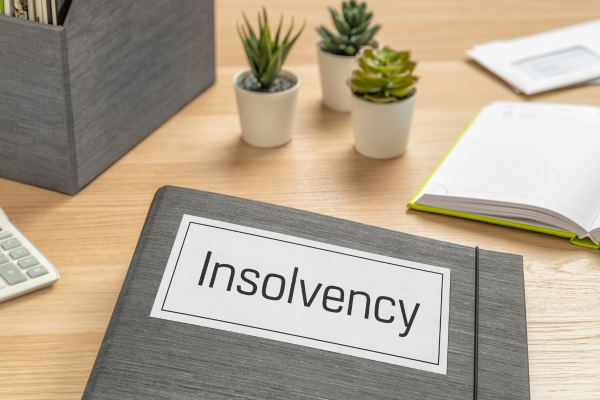
The Insolvency and Bankruptcy Code (IBC) framework in 2025 continued to face mounting pressure, with resolution processes extending far beyond the statutory limits despite efforts by the National Company Law Tribunal (NCLT) to manage its limited capacity. Legal experts and senior advocates have highlighted significant delays, with nearly 10,000 cases pending at the admission stage and recoveries worth more than INR 10 lakh crore tied up in distressed assets. Almost 24 of the 30 NCLT courts across the country have been operating only on half-day schedules, further constraining timely resolutions. Advertisement






Delays have been attributed not only to limited capacity but also to repeated adjournments, contested defaults, and excessive litigation under Section 60(5) of the IBC. Senior Advocate Ramji Srinivasan noted that the challenges faced by NCLT stem from structural issues rather than lack of effort, including delays in appointing qualified members and inadequate infrastructure support. Originally envisioned to handle primarily company matters, the NCLT has been burdened over the past decade by a surge in cases under the IBC, without a corresponding increase in judges or infrastructure.
Since the Corporate Insolvency Resolution Process (CIRP) provisions came into force in December 2016, the NCLT has admitted 8,659 cases as of the September 2025 quarter, according to data from the Insolvency and Bankruptcy Board of India (IBBI). Of these, 1,300 CIRPs were approved, 1,223 withdrawn under Section 12A, and 1,342 settled. Currently, over 15 benches of NCLT handle 1,898 ongoing CIRP cases in addition to numerous other cases at the admission stage.
The average time to complete an insolvency resolution has risen by 126 days over the past 18 months, reaching nine months by September 2025. While the average duration was 566 days by March 2024, it increased to 688 days in the September 2025 quarter, excluding litigation and other procedural delays during CIRP. Senior Advocate P. Nagesh stated that statutory timelines of 270 days (extendable to 330 days) remain largely unachievable in practice.
The government appointed 24 new members earlier this year, yet NCLT and NCLAT still lack sufficient bench strength to manage the complexity and volume of cases. Structural issues, slow admissions, repeated adjournments, incomplete filings, and contested defaults have compounded the delays. Additionally, the influence of parallel regulatory regimes, such as the Prevention of Money Laundering Act (PMLA), has deterred bidders from taking over certain corporate debtors due to attached assets.
Infrastructure constraints continue to affect key benches in Delhi, Chandigarh, and other cities, impacting stakeholders across the board, according to NCLT Bar Association Secretary General Saurabh Kalia. However, data shows that as of September 30, 2025, out of 53,727 total cases filed, 46,725 have been disposed of, leaving 7,002 pending.
Experts describe 2025 as a year of course correction, with a shift from merely expanding insolvency access to focusing on calibrated entry, enforcing timelines, and encouraging parallel or pre-emptive restructuring. While NCLT technically operated with a sanctioned strength of 63 members, practical limitations meant many members presided over multiple courts through video conferencing.
Siddharth Srivastava of Khaitan & Co observed that bench strength is only one factor among several causing delays, including legacy backlog, complexity of large CIRPs, frequent litigation, incomplete records, and delayed cooperation from ex-management. Landmark cases such as the review of the Bhushan Power and Steel judgment reinforced the limited jurisdiction of tribunals and emphasized commercial wisdom in resolution plans, with the Supreme Court advising High Courts to refrain from interfering in IBC matters.
Suraj Kumar Singh of SKS & Partners highlighted that delays in approval of resolution plans have created anxiety among bidders, particularly because once a plan is approved by the Committee of Creditors (CoC), it cannot be withdrawn. He added that the frequent use of Section 60(5) applications has increasingly become a tool to derail, rather than facilitate, resolutions.
Source PTI

5th Jun, 2025

25th May, 2023

11th May, 2023

27th Apr, 2023
Advertisement









 Facebook
 Whatsapp
