Advertisement






Private equity has played a significant role in shaping Indi...
In today’s real estate landscape, fitness is often treated...
In this episode of Prop Personalities, we sit down with Hars...
Luxury real estate is one of the most talked-about segments ...
Welcome to Prop Personalities by Prop News Time - a podcast ...
India and Bhutan are moving ahead with their first-ever cross-border railway connections through the Kokrajhar-Gelephu and Banarhat-Samtse links. With a combined investment of INR 4,033 crore (USD 454 million), these projects aim to enhance trade, transport, and people-to-people ties between the two countries. The Kokrajhar-Gelephu line will stretch 69 km, while the Banarhat-Samtse line will cover 20 km. The projects, expected to be completed within three to four years, reflect the growing bilateral cooperation in infrastructure and regional connectivity.
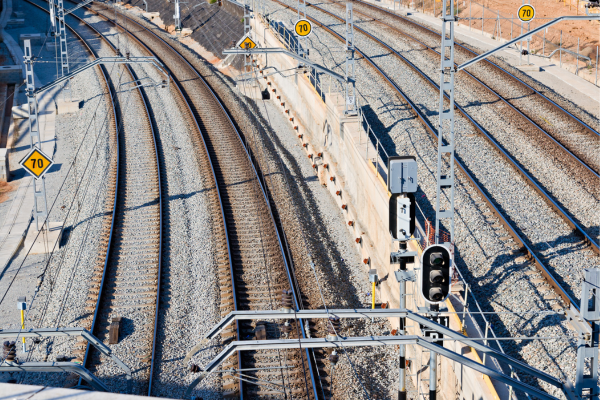
India has announced plans to construct two cross-border railway lines connecting Assam and West Bengal with Bhutan, marking the first railway connectivity between the two nations. The projects, with a total estimated cost of INR 4,033 crore (USD 454 million), are intended to strengthen trade, transport, and bilateral ties. Advertisement






The 69-km Kokrajhar-Gelephu line will link Assam's Kokrajhar with Bhutan's Gelephu. This line will feature six stations, two major bridges, two viaducts, 29 other large bridges, 65 smaller bridges, two goodsheds, one road-over-bridge, and 39 road-under-bridges. Approximately 2.39 km of the alignment will fall within Bhutan. The project is expected to be completed in four years and carries an estimated cost of INR 3,456 crore.
The 20-km Banarhat-Samtse line will connect West Bengal's Banarhat to Bhutan's Samtse. This line will have two intermediate stations and is projected to cost INR 577 crore, with completion expected within three years.
India continues to be Bhutan's largest development partner, providing INR 10,000 crore in project-tied assistance, community projects, economic stimulus programs, and grants under Bhutan's 13th five-year plan (2024-29). This commitment represents a 100% increase compared to the 12th five-year plan.

5th Jun, 2025

25th May, 2023

11th May, 2023

27th Apr, 2023
Advertisement









 Facebook
 Whatsapp
