Advertisement










Private equity has played a significant role in shaping Indi...
In today’s real estate landscape, fitness is often treated...
In this episode of Prop Personalities, we sit down with Hars...
Luxury real estate is one of the most talked-about segments ...
Welcome to Prop Personalities by Prop News Time - a podcast ...
The Municipal Corporation of Delhi (MCD) has announced plans to expand its zero-waste initiative by adding 200 new colonies by 2027, aiming to process an additional 25 tonnes of waste daily. Currently, 633 areas, including 593 residential colonies and 40 institutions, manage approximately 100 tonnes of waste each day through segregation and composting. Launched in September 2022 under the 'Swachhta Abhiyan,' the program faces challenges such as limited space, community engagement, and stringent certification criteria. Incentive schemes like "Harit Mitra" and 'Sahbhagita' offer property tax rebates to encourage participation.
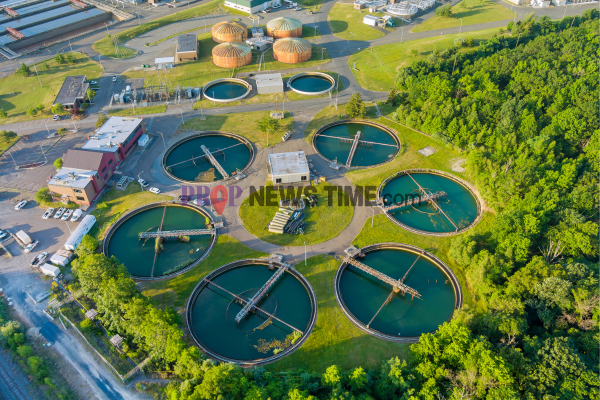
To promote sustainable urban living, the Municipal Corporation of Delhi (MCD) has announced plans to establish 200 additional zero-waste colonies by 2027. This initiative aims to bolster the city's waste management capabilities by processing an extra 25 tonnes of waste daily. Advertisement


As of now, Delhi boasts 633 certified zero-waste areas, comprising 593 residential colonies and 40 institutions. These areas collectively manage around 100 tonnes of waste each day through meticulous segregation and composting practices. The zero-waste model involves categorizing waste into wet, dry, sanitary, domestic hazardous, and e-waste, with processing conducted within the colony premises. Wet waste undergoes decentralized composting, while dry waste is handled by authorized recyclers.
Despite the program's inception in September 2022 under the "Swachhta Abhiyan," progress has been gradual. Challenges such as limited space for waste processing infrastructure, behavioral hurdles, and rigorous certification standards have impeded rapid expansion. Civic officials emphasize the need for community cooperation to overcome these obstacles.
To incentivize participation, MCD introduced the "Harit Mitra" and "Sahbhagita" schemes in 2022. "Harit Mitras" are responsible for maintaining gardens and overseeing in-situ wet waste composting. "Sahbhagita" colonies, on the other hand, commit to 100% waste segregation and composting within their premises. These colonies are eligible for a property tax rebate of 10%, capped at INR 1 lakh, provided they achieve at least 90% property tax compliance.
Currently, there are 338 "Sahbhagita" colonies and 255 "Harit Mitra" colonies in Delhi. MCD officials have set targets for each zone to incorporate more planned areas and group housing societies into the zero-waste framework.
Residents have voiced concerns regarding the stringent conditions for incentives. Achieving high compliance levels, securing space and manpower, and meeting MCD's criteria pose significant challenges. In response, discussions are underway to remove the INR 1 lakh cap on development works and introduce user charge rebates to enhance support and participation.
The success of this program could serve as a model for other metropolitan areas grappling with waste management issues. As the city progresses towards its 2027 goal, continuous engagement, policy adjustments, and community participation will be essential in transforming Delhi into a greener, more sustainable capital.

5th Jun, 2025

25th May, 2023

11th May, 2023

27th Apr, 2023
Advertisement





 Facebook
 Whatsapp
