Advertisement










Private equity has played a significant role in shaping Indi...
In today’s real estate landscape, fitness is often treated...
In this episode of Prop Personalities, we sit down with Hars...
Luxury real estate is one of the most talked-about segments ...
Welcome to Prop Personalities by Prop News Time - a podcast ...
CREDAI-MCHI, in collaboration with the Maharashtra Pollution Control Board (MPCB) and WRI India, recently organised a capacity-building workshop in Mumbai to address the rising concern of air pollution caused by construction activities. The event gathered site engineers, safety officers, and project managers to discuss practical measures for mitigating dust and emissions, such as fogging, wheel washing, and isolating active zones. WRI India conducted a technical session on real-time monitoring, data transparency, and compliance with state guidelines, while representatives from BMC and CREDAI-MCHI emphasised the importance of sustainable construction practices. The workshop concluded with a pledge to implement structured mitigation strategies and promote environmentally responsible construction in the Mumbai Metropolitan Region (MMR).
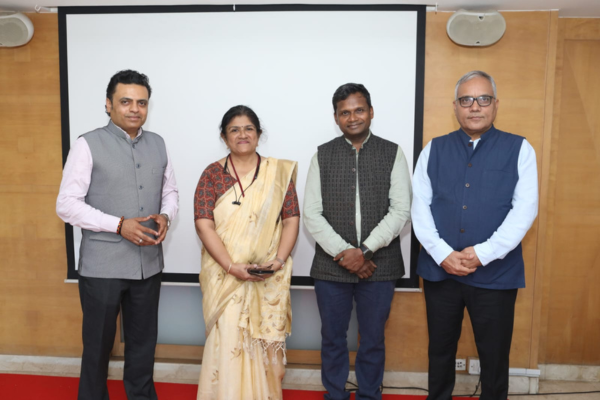
A capacity-building workshop was recently held in Mumbai by CREDAI-MCHI, the Maharashtra Pollution Control Board (MPCB), and WRI India to address air pollution from construction sites. Conducted at the CREDAI-MCHI office, the event brought together site engineers, safety officers, environmental professionals, and project managers from across the Mumbai Metropolitan Region (MMR) to receive hands-on training on implementing pollution control measures effectively. Advertisement


Experts at the workshop highlighted that despite the availability of measures such as fogging, wheel washing, and isolating active zones, the actual implementation of these solutions remains inconsistent. The focus was placed on ensuring practical application to curb emissions in a city that continues to witness dense redevelopment and construction.
WRI India led a technical session that included training on the effective use of cost-efficient tools to monitor environmental parameters, in line with guidelines set by the Maharashtra State Pollution Control Board. Emphasis was placed on integrating CCTV systems and continuous air quality monitoring to foster data-driven decision-making and enhance regulatory compliance. Proper documentation and data transparency were stressed as critical components in promoting sustainable construction practices.
Revati Shidhaye, Executive Engineer at the Environment and Climate Change Department, BMC, expressed concern over the impact of construction dust on public health, stressing that real change must originate from within. Shidhaye noted that Mumbai's construction sector has the potential to set a national example by adopting sustainable practices that align with global standards.
Keval Valambhia, Chief Operating Officer of CREDAI-MCHI, acknowledged that while the construction sector is not the sole contributor to urban air pollution, it plays a significant role in both the problem and the solution. Valambhia stated that CREDAI-MCHI members have taken steps to comply with government guidelines but emphasised the need for continued hands-on learning and pilot projects to demonstrate viable solutions.
Sree Kumar Kumaraswamy, Programme Director at WRI India, stressed the importance of integrating dust mitigation with project planning to ensure that construction progresses responsibly. He noted that monitoring air quality on-site enables data-driven decisions that benefit both site managers and regulatory authorities while also addressing health hazards to workers and surrounding communities.
The workshop concluded with a renewed commitment from CREDAI-MCHI to advance sustainable construction practices in the MMR. As a leading real estate body with over 1,800 members, the organisation pledged to work closely with government authorities and environmental experts to foster a cleaner, healthier Mumbai through structured mitigation efforts and ongoing advocacy.
CREDAI-MCHI's commitment to fostering environmentally responsible construction practices aligns with its broader mission to drive sustainable development across the Mumbai Metropolitan Region. By continuing to collaborate with civic authorities and environmental experts, CREDAI-MCHI aims to reinforce its role as a leading advocate for sustainable growth in one of India's most densely populated urban centres.

5th Jun, 2025

25th May, 2023

11th May, 2023

27th Apr, 2023
Advertisement





 Facebook
 Whatsapp
