Advertisement










Private equity has played a significant role in shaping Indi...
In today’s real estate landscape, fitness is often treated...
In this episode of Prop Personalities, we sit down with Hars...
Luxury real estate is one of the most talked-about segments ...
Welcome to Prop Personalities by Prop News Time - a podcast ...
India's top seven cities are set to add approximately 16.6 million sq ft of Grade A retail space in malls by the end of 2026, according to Anarock. Hyderabad and Delhi-NCR will lead this expansion, accounting for 65% of the new supply. The surge is driven by a persistent demand-supply gap, as leasing has consistently outpaced new supply over the past three years. In 2024, only 1.1 million sq ft of new space was added, while leasing hit 6.5 million sq ft. With over 12.6 million sq ft expected to be leased in the next two years, demand remains strong. Growth is also extending to tier II and III cities, highlighting a nationwide retail boom.
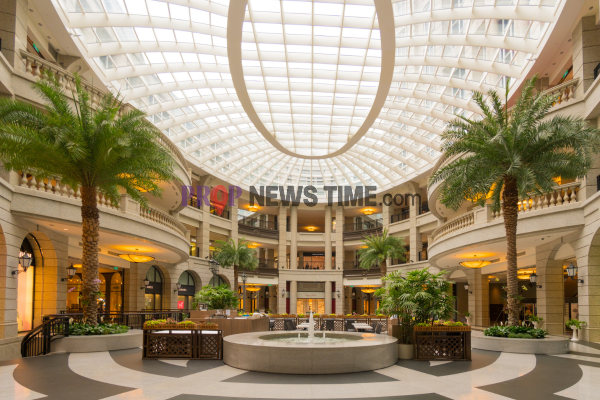
The country's top seven cities will see the addition of roughly 16.6 million square feet of Grade A retail space in shopping malls by the end of next year, according to a forecast by Anarock. The fresh supply is expected to be delivered across 2025 and 2026, with Hyderabad and Delhi-NCR commanding the largest share at 65 per cent. Other cities expected to see a rise in retail space supply include Mumbai, Kolkata, Chennai, Bengaluru, and Pune. Advertisement


Anarock's CEO and MD, Anuj Kejriwal, stated that the surge in new retail spaces is driven by a significant shortfall in the supply of Grade A malls across these cities. He pointed out that leasing activity in the past three years has consistently outpaced new supply, resulting in a widening demand-supply gap.
In 2022, the seven cities saw only 2.6 million sq ft of new Grade A retail supply, while leasing activity hit 3.2 million sq ft. The following year witnessed 5.3 million sq ft of fresh supply, yet leasing remained higher at 6.5 million sq ft. The gap widened further in 2024, as regulatory approvals slowed down due to general and state elections, resulting in just 1.1 million sq ft of new mall space, while leasing surged to 6.5 million sq ft, as per Kejriwal.
Despite the anticipated influx of new supply, Anarock maintains that current leasing trends indicate robust demand, with projections suggesting over 12.6 million sq ft of retail space to be leased over the next two years.
The expansion of retail real estate is also gaining traction in tier II and III cities, as highlighted by Abhishek Bansal, Managing Director of Pacific Group. He noted that while metro cities dominate, emerging hubs such as Jaipur are becoming increasingly attractive, emphasising the need for quality retail infrastructure beyond tier I cities.
Pacific Group currently operates nine shopping malls comprising more than 3 million sq ft of retail space across Delhi, Ghaziabad, Faridabad, and Dehradun. Meanwhile, Pralayesh Guha, Vice President of Projects at Trehan Iris, highlighted that Delhi NCR is likely to lead the expansion due to evolving consumer preferences, improving infrastructure, and shifting lifestyle trends.
In Hyderabad, Kirthi Chilukuri, Founder and MD of Stonecraft Group, said that the rapid development of Grade A retail spaces is a direct reflection of the city's growing economic strength and rising consumer confidence. He noted a strong correlation between the expansion of retail infrastructure and demand for premium residential spaces.
Bengaluru-based BCD Group's CMD, Angad Bedi, remarked that both homegrown and international brands are capitalising on rising consumer demand and a dynamic retail landscape, further driving the retail real estate expansion.
The projected surge addresses a persistent demand-supply gap that has widened over the past three years, driven by robust leasing activity. Despite concerns of potential oversupply, industry experts remain optimistic about absorption levels, citing sustained consumer demand and increased interest from both domestic and international brands.
Source: PTI

5th Jun, 2025

25th May, 2023

11th May, 2023

27th Apr, 2023
Advertisement





 Facebook
 Whatsapp
