Advertisement










Private equity has played a significant role in shaping Indi...
In today’s real estate landscape, fitness is often treated...
In this episode of Prop Personalities, we sit down with Hars...
Luxury real estate is one of the most talked-about segments ...
Welcome to Prop Personalities by Prop News Time - a podcast ...
Dubai's real estate market saw a record-breaking monthly sales value of AED 66.8 billion earlier this week, which represents a nearly 50% increase over the same time last year. Transaction volumes remained robust, reflecting sustained demand and a maturing market. While the residential segment shows no signs of oversupply despite a large pipeline of upcoming units, certain neighbourhoods like Jumeirah Village Circle might experience short-term price adjustments. Conversely, the commercial office sector is grappling with a significant undersupply, pushing prices upward. The city's appeal as a global hub for high-net-worth investors continues to underpin its property market strength.
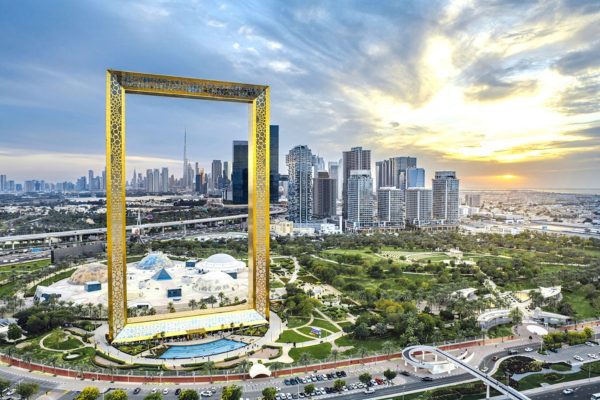
The Dubai real estate market reached a new monthly sales milestone earlier this week, recording a total transaction value of AED 66.8 billion. This figure represents a remarkable 49.9% increase compared to the same month last year and stands as one of the highest monthly volumes on record, with 18,693 transactions completed. Advertisement


According to fam Properties, the data sourced from DXBinteract illustrates a market characterised by solid fundamentals and gradual evolution. Firas Al Msaddi, CEO of fam Properties, emphasised that the residential sector currently shows no broad risk of oversupply. He clarified that while growth rates have moderated, this does not equate to a market correction but rather indicates increased market maturity.
Over the next five years, around 363,000 residential units are expected to be delivered in Dubai, although more than 270,000 remain at early construction phases with progress below 20%. Only about 12,000 units are nearing completion with 80 to 99% progress, dispelling concerns of an immediate glut of new homes. Moreover, project completions in 2024 declined by 23% compared to the previous year, highlighting a slowdown in ready-to-move-in inventory.
Al Msaddi pointed out that some specific areas, such as Jumeirah Village Circle, which anticipates approximately 20,000 new units over the coming four to five years, may face temporary pricing pressures due to concentrated supply. However, he underlined that any such price corrections are likely to be short-lived and localized, with overall demand and absorption expected to remain strong across Dubai.
In contrast to the residential market, Dubai's commercial real estate sector is experiencing a notable undersupply of quality office space, especially within prime business districts. The scarcity of new commercial inventory combined with persistent demand is driving value appreciation, with no signs of price corrections in this segment.
Dubai's property sales value has seen substantial growth over the past five years - rising from AED 2.3 billion in 2020 to AED 46.4 billion last year, alongside a dramatic increase in transaction volumes.
Among last month's high-value transactions, a luxury villa on Palm Jumeirah sold for AED 300 million, while the priciest apartment, located at Jumeirah Residences Asora Bay, commanded AED 164 million.
The city's real estate market is further bolstered by shifting global wealth patterns. Data from DXBinteract reveals that while London has lost 45% of its millionaires over the past decade, Dubai's millionaire population surged by 212% during the same period. This shift reflects a growing confidence among global investors in Dubai's stable environment for preserving and growing wealth.
Properties priced above AED 5 million accounted for 14% of sales last month, while the AED 1-2 million range made up 30%. Units under AED 1 million contributed 26%, those between AED 2-3 million represented 18%, and the AED 3-5 million bracket formed 12% of transactions. First-time sales from developers outpaced resales, accounting for 66% of volume and 67% of transaction value, signalling ongoing investor appetite for new developments.
Meanwhile, the office space deficit underscores a lucrative opportunity for commercial development. Coupled with Dubai's increasing attractiveness as a global wealth centre, the market's trajectory suggests a promising outlook, underpinned by a blend of strategic planning, diversified demand, and international investor confidence.

5th Jun, 2025

25th May, 2023

11th May, 2023

27th Apr, 2023
Advertisement





 Facebook
 Whatsapp
