Advertisement










Private equity has played a significant role in shaping Indi...
In today’s real estate landscape, fitness is often treated...
In this episode of Prop Personalities, we sit down with Hars...
Luxury real estate is one of the most talked-about segments ...
Welcome to Prop Personalities by Prop News Time - a podcast ...
The Mumbai Metropolitan Region Development Authority (MMRDA) has secured a INR 1,500 crore loan from Bank of Maharashtra to kickstart the redevelopment of Ramabai Ambedkar Nagar and Kamraj Nagar in Ghatkopar. This marks the first financial closure under MMRDA's INR 8,498 crore Slum Rehabilitation Authority (SRA) project and its first direct involvement in slum redevelopment at this scale. Backed by Chief Minister Devendra Fadnavis and Deputy CM Eknath Shinde, the project aims to transform dense informal settlements into dignified residential zones. With a funding mix of institutional loans and internal revenues, MMRDA plans to deliver inclusive, sustainable redevelopment and set a model for future urban renewal efforts.
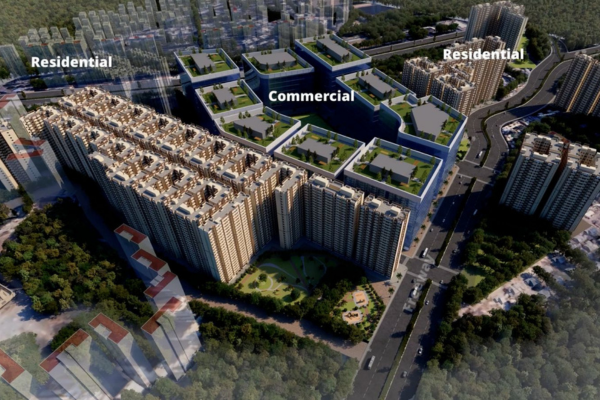
In a major stride toward inclusive urban renewal, the Mumbai Metropolitan Region Development Authority (MMRDA) secured a crucial INR 1,500 crore institutional loan from the Bank of Maharashtra earlier this week. The funding will facilitate the redevelopment of Ramabai Ambedkar Nagar and Kamraj Nagar in Ghatkopar marking the first financial closure under MMRDA's INR 8,498 crore Slum Rehabilitation Authority (SRA) project. This initiative also represents MMRDA's first direct involvement in a slum redevelopment programme of such magnitude. Advertisement


Under the guidance of Maharashtra's Hon'ble Chief Minister Devendra Fadnavis and Deputy Chief Minister Eknath Shinde, who also chairs MMRDA, this venture is poised to transform one of Mumbai's oldest and most densely populated informal settlements into a well-planned, dignified residential enclave. The project reflects a commitment to not just shelter, but to improving the quality of life for thousands of citizens who have long awaited comprehensive infrastructure upgrades.
MMRDA has employed a diversified funding model to secure the project's financial viability. Out of the total estimated project cost of INR 8,498 crore, INR 3,916 crore is planned to be mobilised through institutional loans. The INR 1,500 crore from Bank of Maharashtra constitutes the first instalment in this structured funding approach, and the agreement for this tranche was finalised recently. This move paves the way for Phase 1 of the project and signals MMRDA's readiness to deliver on its urban development commitments.
Chief Minister Shri Devendra Fadnavis remarked that the redevelopment serves as a symbol of the government's mission to create a Mumbai where every citizen has access to equal opportunity, dignity, and security. He added that by addressing long-standing redevelopment challenges with a sustainable financial model, the government is ensuring that such large-scale initiatives are delivered with transparency and speed.
Echoing this vision, Deputy Chief Minister and MMRDA Chairman Shri Eknath Shinde noted that the loan approval is a firm endorsement of the administration's shared goal to uplift communities. He emphasised that the project would bring overdue transformation to thousands of families, providing improved housing and stronger community foundations.
Dr. Sanjay Mukherjee, IAS, Metropolitan Commissioner of MMRDA, highlighted that the redevelopment is more than just infrastructure-it is a framework for inclusive and sustainable urban growth. He stated that the funding structure-46% via institutional loans and 39% from internal revenue streams-was designed to balance fiscal discipline with public welfare. According to him, Ramabai Nagar's redevelopment will act as a benchmark for future SRA endeavours across the metropolitan region.
With high-level backing from Maharashtra's political leadership and a focus on community upliftment, the initiative underlines a growing emphasis on integrated urban renewal. As infrastructure and social equity continue to converge, this project is set to reshape not only neighbourhoods but also the broader approach to redevelopment across the region.

5th Jun, 2025

25th May, 2023

11th May, 2023

27th Apr, 2023
Advertisement





 Facebook
 Whatsapp
