Advertisement










Private equity has played a significant role in shaping Indi...
In today’s real estate landscape, fitness is often treated...
In this episode of Prop Personalities, we sit down with Hars...
Luxury real estate is one of the most talked-about segments ...
Welcome to Prop Personalities by Prop News Time - a podcast ...
Three days after the Centre announced a ban on all non-essential construction and demolition activities in Delhi-NCR on account of rising air pollution levels, the authorities are now said to have lifted all cubs imposed in the city under stage III of the Graded Response Action Plan (GRAP). As of Tuesday, Delhi’s 24-average air quality index (AQI) was around 385, down by 14 points since the week before.
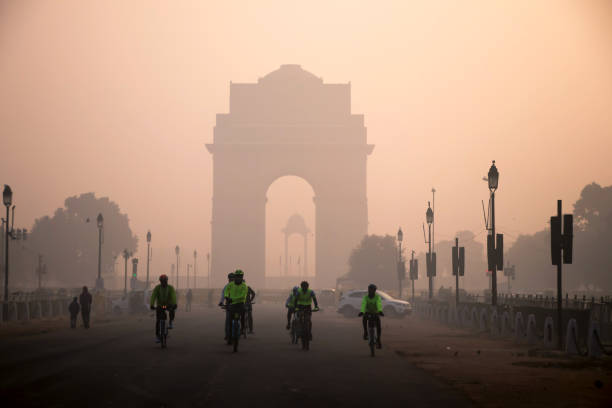
Three days after the Centre announced a ban on all non-essential construction and demolition activities in Delhi-NCR on account of rising air pollution levels, the authorities are now said to have lifted all cubs imposed in the city under stage III of the Graded Response Action Plan (GRAP). As of Tuesday, Delhi’s 24-average air quality index (AQI) was around 385, down by 14 points since the week before.
Advertisement


GRAP has been developed by the Central Pollution Control Board (CPCB) in consultation with state pollution control boards and other stakeholders and aims to address the problem of air pollution in the NCR through a combination of short-term and long-term measures. The goal of GRAP is to reduce the levels of air pollution in the NCR and improve the air quality for the residents of the region.
Under GRAP, different sets of measures are triggered based on the level of air pollution in the region. For example, when air pollution levels reach "severe" or "emergency" levels, measures such as the closure of schools and construction activities may be implemented. GRAP also includes measures to reduce the use of private vehicles, such as carpooling and the implementation of the odd-even rule (under which vehicles with odd-numbered plates are allowed to be driven on odd-numbered dates, and vice versa).

5th Jun, 2025

25th May, 2023

11th May, 2023

27th Apr, 2023
Advertisement





 Facebook
 Whatsapp
