Advertisement










Private equity has played a significant role in shaping Indi...
In today’s real estate landscape, fitness is often treated...
In this episode of Prop Personalities, we sit down with Hars...
Luxury real estate is one of the most talked-about segments ...
Welcome to Prop Personalities by Prop News Time - a podcast ...
Savarkar Sadan, the historic residence of Vinayak Damodar Savarkar near Shivaji Park in Mumbai, is likely to be demolished and redeveloped. Built in 1938, the structure has deteriorated due to internal damage, prompting residents-some of whom have already sold their units to a developer-to support redevelopment. The bungalow holds deep historical significance, having hosted figures like Subhas Chandra Bose and Nathuram Godse. Over time, it was expanded under the TDR scheme. Currently, a small museum run by the Savarkar Trust operates on the ground floor. The Trust aims to retain and expand the museum in the new building while preserving the legacy by retaining the name 'Savarkar Sadan'.
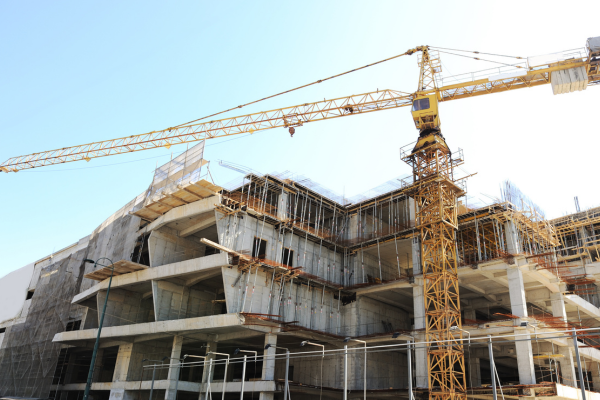
The iconic Savarkar Sadan, located near Shivaji Park in Dadar, Mumbai, is likely to be demolished and redeveloped, as residents of the building have recently agreed to the plan. Some of them have reportedly already sold their apartments to a real estate developer, accelerating the transition. Though the facade of the building was recently painted, insiders revealed that the internal structure is suffering from severe water damage and structural decay, making redevelopment a pressing concern. Advertisement


Built in 1938 on a 405-square-metre plot, this bungalow once served as the residence of Vinayak Damodar Savarkar-freedom fighter, revolutionary, and ideologue of the Hindutva movement. Savarkar, who founded the Abhinav Bharat Society and later became a leading figure in the Hindu Mahasabha, lived in this residence until his death in 1966. Over the decades, the bungalow bore witness to a number of historic events. It was within these walls that Subhas Chandra Bose had once visited Savarkar in 1940, and it was here that Nathuram Godse and Narayan Apte reportedly met him shortly before the assassination of Mahatma Gandhi in 1948.
Following Savarkar's passing, his family members continued residing in the building. During the 1980s and early 1990s, three additional floors were added to the original structure under Mumbai's Transferable Development Rights (TDR) scheme, which permits vertical expansion. As of now, the ownership of the property is fragmented, shared by multiple parties, some of whom have opted for sale to a developer.
The ground floor houses a one-room museum operated by the Swatantryaveer Savarkar Rashtriya Smarak Trust. The Trust is now seeking to retain its presence in the redeveloped structure, with plans to expand the museum space by acquiring an additional mezzanine floor. A representative from the Trust conveyed their desire to preserve the identity of the location by continuing to refer to the space as 'Savarkar Sadan' in the new building.

5th Jun, 2025

25th May, 2023

11th May, 2023

27th Apr, 2023
Advertisement





 Facebook
 Whatsapp
