Advertisement










Private equity has played a significant role in shaping Indi...
In today’s real estate landscape, fitness is often treated...
In this episode of Prop Personalities, we sit down with Hars...
Luxury real estate is one of the most talked-about segments ...
Welcome to Prop Personalities by Prop News Time - a podcast ...
The National Highways Authority of India (NHAI), in collaboration with GR Infraprojects Ltd., is set to construct an 88 km, six-lane expressway connecting Agra and Gwalior at an estimated cost of INR 4,613 crore. The Greenfield expressway, expected to be completed in 30 months, will enhance connectivity between prominent tourism hubs and improve logistical efficiency. Additionally, the project will feature wildlife conservation measures, including a cable-stayed bridge over the Chambal River, aiming to safeguard local fauna.
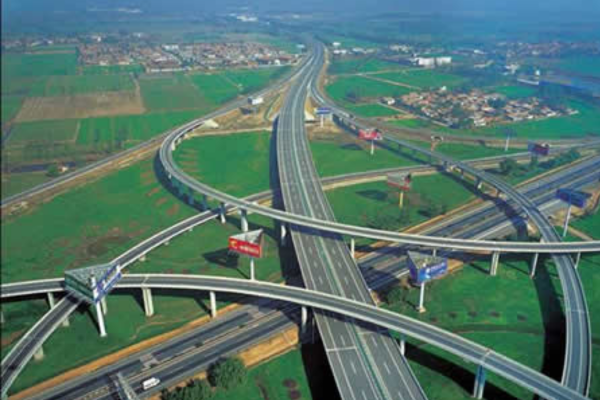
GR Infraprojects Ltd. and the National Highways Authority of India (NHAI) have teamed up to build a significant Greenfield motorway that will link the ancient cities of Agra and Gwalior. This ambitious project, which is part of the government's larger initiative to enhance transportation infrastructure, is expected to significantly improve connectivity and bolster the regional tourism industry. Advertisement


The proposed expressway, which spans 88 km, will be a six-lane access-controlled route. The project, valued at INR 4,613 crore, is being implemented under a Build-Operate-Transfer (Toll) model, with a 20-year concession period. The construction phase, expected to take 30 months, is set to begin shortly, marking a significant step in enhancing national highway infrastructure.
The expressway will begin at Deori village in Agra and will end at Susera village in Gwalior, passing through the states of Uttar Pradesh, Rajasthan, and Madhya Pradesh. It is specifically designed to reduce travel time between these two major tourism hubs, Agra, known for the Taj Mahal, and Gwalior, renowned for its fortifications and rich cultural heritage. This improvement in connectivity is expected to make travel more convenient and encourage the flow of tourists between the two cities, thus benefiting the local economy.
In addition to improving tourism, the expressway is expected to ease traffic congestion on existing routes, significantly cutting down on travel time. The expressway will also serve as a vital corridor for the transportation of goods, enhancing logistical efficiency in the region. The expressway is expected to be a game-changer for businesses, as it will streamline the movement of goods and services between key cities in northern India.
As part of the project, several essential infrastructure elements will be constructed, including eight major bridges, 23 minor bridges, six flyovers, one rail-over-bridge, and 192 culverts. The expressway will also incorporate modern road safety measures, ensuring a safer driving experience for travelers.
One of the most critical features of this expressway project is its consideration for environmental sustainability. The route will pass through the National Chambal Wildlife Sanctuary, an area home to a variety of wildlife species, including the endangered Gharial crocodile. To minimize the environmental impact, the project will include a cable-stayed bridge over the Chambal River, allowing the Gharials to continue their habitat undisturbed. Furthermore, the expressway will implement other wildlife conservation measures, such as sound barriers and light cutters, to prevent any adverse effects on the sanctuary's fauna.
The government's emphasis on Public-Private Partnerships (PPP) has been pivotal in the development of this expressway. By encouraging private sector involvement, the government is seeking to foster a more efficient and sustainable approach to infrastructure development. This project not only contributes to enhancing India's transportation network but also serves as a model for future projects of similar scale.
In addition to improving logistics and tourism, this expressway forms a crucial part of India's broader infrastructure goals, which aim to drive economic growth and regional development. By connecting major tourism and economic hubs, the Agra-Gwalior Greenfield Expressway will play a vital role in strengthening the country's transportation ecosystem.
As the government continues to prioritize infrastructure projects under PPP models, this expressway is poised to be a significant contributor to India's long-term development plans, making it a critical milestone in the nation's transportation history.

5th Jun, 2025

25th May, 2023

11th May, 2023

27th Apr, 2023
Advertisement





 Facebook
 Whatsapp
