Advertisement










Private equity has played a significant role in shaping Indi...
In today’s real estate landscape, fitness is often treated...
In this episode of Prop Personalities, we sit down with Hars...
Luxury real estate is one of the most talked-about segments ...
Welcome to Prop Personalities by Prop News Time - a podcast ...
In a key step for India's first bullet train project, Japan will donate two Shinkansen rakes-E5 and E3 series-for test and inspection runs on the Mumbai-Ahmedabad high-speed rail corridor. With 48% of the 508-km route completed, the trains are expected to arrive well before the project's August 2026 launch. The E5 model, capable of 320 kmph, will support initial trials between Surat and Bilimora. Japan is also funding a large share of the INR 1.1 lakh crore project through low-interest loans, echoing its longstanding role in India's infrastructure growth, similar to France's early support for the Delhi Metro.
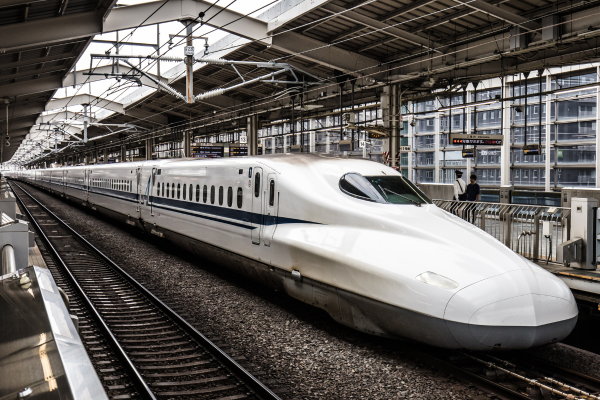
The Japanese government is set to donate two high-speed Shinkansen train sets to India, aiding the crucial trial phase of the Mumbai-Ahmedabad bullet train corridor, which is expected to become operational by August 2026. The train sets-E5 and E3 series-will be used primarily for inspection and test runs along the corridor. Advertisement


These rakes, known globally for their precision engineering and speed, are part of Japan's commitment to support India's Maharashtra-Gujarat high-speed rail infrastructure, which will feature the country's first bullet train system. The E5 model is already operational in Japan and is designed to cruise at speeds up to 320 kmph, making it ideal for the planned 508-kilometre corridor between Mumbai and Ahmedabad.
The E3 and E5 Shinkansen models are proven high-speed systems with excellent acceleration control, aerodynamic design, and earthquake-resilient features-all critical factors for India's terrain and climate. The E3 variant has been in service since the 1990s, while the E5 is a newer generation that was deployed in 2011.
Japan has also offered India its next-gen E10 trains, although those are likely to be introduced later in the decade, once the full corridor is operational and India's engineers have acquired more experience with high-speed rail systems.
The National High-Speed Rail Corporation Limited (NHSRCL) has announced that viaduct construction for the bullet train line is progressing well, with around 48% of the 508-km corridor now complete. Pillar foundations and viaducts are steadily being built across 292 km, with girders launched across 320 km. Key sections through Thane, Palghar, and Mumbai remain the most complex due to tunnelling and the arrival of tunnel boring machines (TBMs).
The Gujarat section has witnessed faster progress. Major bridge and pier works have already been completed over rivers like Par, Vaitarna, Dhadhar, and Kim, while 14 rivers across Maharashtra are in the process of being bridged using pre-stressed concrete (PSC) structures.
The donated rakes are expected to arrive well ahead of the commercial launch, allowing Indian engineers to familiarise themselves with Shinkansen-level safety protocols and operational systems. The section between Surat and Bilimora is likely to be the first to become operational for trials.
In the meantime, work continues on constructing overhead equipment (OHE) and installation of steel masts. Recent progress has also been noted on crucial terminal stations such as BKC in Mumbai and Shilphata, which will anchor the Maharashtra portion of the route.
The Shinkansen rakes are being introduced as part of a broader India-Japan partnership that extends beyond infrastructure. Japan is funding a large portion of the INR 1.1 lakh crore project via low-interest loans and has provided engineering support, training modules, and design blueprints, adapted from Japan's bullet train systems.
The move is reminiscent of how France supported India's metro expansion by providing early rakes and tech assistance for Delhi Metro's Phase 1 in the early 2000s. That partnership helped shape India's urban transit story-just as Japan now aims to shape its high-speed intercity mobility narrative.

5th Jun, 2025

25th May, 2023

11th May, 2023

27th Apr, 2023
Advertisement





 Facebook
 Whatsapp
