Advertisement










Private equity has played a significant role in shaping Indi...
In today’s real estate landscape, fitness is often treated...
In this episode of Prop Personalities, we sit down with Hars...
Luxury real estate is one of the most talked-about segments ...
Welcome to Prop Personalities by Prop News Time - a podcast ...
The recent hike in ready reckoner rates (RRR) has raised concerns in Mumbai's real estate sector, pushing the city's home affordability index to 51%, above the critical 50% mark. Higher RRR means increased property prices, stamp duties, and developer premiums, making affordable housing harder to build. While government schemes like PMAY support low-cost homes, developers now face tighter margins. However, projects under MHADA are less affected, as their pricing is based on actual development costs, not RRR. MHADA also offers fixed registration and low stamp duty fees, keeping homes accessible for low- and middle-income groups. Prices for already allotted MHADA homes will remain unchanged despite the rate hike.
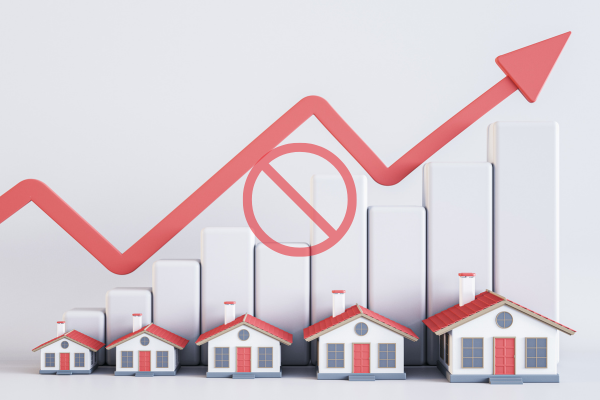
The rise in ready reckoner rates (RRR) has sparked concerns in the real estate market, with homebuyers worried about increasing property prices and developers facing challenges in constructing affordable housing. According to JLL India's latest affordability index study, Mumbai's affordability ratio has already surpassed the critical 50% threshold, reaching 51% in terms of home buying. Advertisement


Real estate experts state that Mumbai's real estate market operates within a delicate balance of policy incentives and regulatory changes. While schemes such as the Pradhan Mantri Awas Yojana (PMAY) have significantly boosted the affordable housing sector, the recent hike in RRR will inevitably lead to higher property prices and stamp duty charges. Developers, particularly those focused on affordable housing, will face additional challenges as profit margins are already minimal due to high construction costs, premium charges, and compliance requirements.
Ready reckoner rates (RR rates), also known as the 'circle rate' or 'guidance value' in several parts of the country, is the minimum per sq ft rate of a property or land fixed by the state government. It is the minimum rate based on which the government can charge registration fees and stamp duty on a property transaction. They are also used to calculate capital gains for income tax. RR rates are linked to all premiums, charges, and floor space index (FSI) rates payable to municipal corporations by real estate developers.
While developers may struggle with affordability concerns following the RR rate revision, some relief exists for people as housing projects developed by the Maharashtra Housing and Area Development Authority (MHADA) will not be as severely impacted. Sanjeev Jaiswal, IAS, Vice President and Chief Executive Officer of MHADA, explained that the cost-based pricing model followed by MHADA differs from the RRR framework. He clarified that MHADA determines the price of its housing units strictly based on actual development costs, which include land acquisition (where applicable), construction expenses, statutory clearances, infrastructure development, and administrative costs. The purpose of this model is to ensure that homes remain accessible to economically weaker sections, low-income groups, and middle-income beneficiaries.
Additionally, irrespective of the size, location, or cost of a house, the registration charges for MHADA homes remain fixed at INR 30,000, with a stamp duty of INR 1,000 for homes under PMAY.
Jaiswal also assured that there would be no revision in prices for homes already allotted through MHADA's lottery system. The price declared at the time of the lottery announcement would remain final and binding, ensuring that beneficiaries in the low-income group (LIG) and middle-income group (MIG) categories would not be affected by the revised RRR.

5th Jun, 2025

25th May, 2023

11th May, 2023

27th Apr, 2023
Advertisement





 Facebook
 Whatsapp
