Advertisement






What really powers the cloud? Behind every Google search, A...
A lot of what defines a home isn’t visible at handover. I...
Private equity has played a significant role in shaping Indi...
Luxury real estate is one of the most talked-about segments ...
Airports play a much bigger role than just enabling travel -...
The Andhra Pradesh government has approved the INR 11,009 crore Phase 1 of the Vijayawada Metro, covering 38.6 km across two corridors-from Gannavaram to PNBS (25.9 km) and PNBS to Penamaluru (12.76 km). With 34 stations planned, the metro aims to ease traffic and enhance urban mobility. Land acquisition of 91 acres is underway at a cost of INR 1,152 crore. The project follows a Public-Private Partnership model, with 40% funding from the Centre. A future extension to Amaravati is also planned. The metro is expected to transform Vijayawada's transport network, linking key areas and supporting regional development.
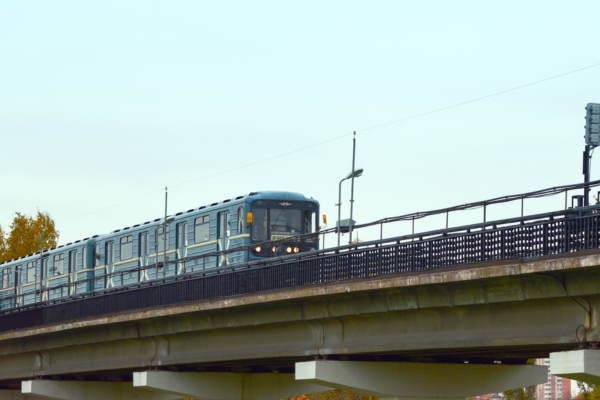
The Vijayawada Metro project represents a significant initiative aimed at enhancing urban mobility in Vijayawada, Andhra Pradesh. Envisioned as a light rail transit system, the metro aims to alleviate traffic congestion and provide a reliable public transportation alternative for the city's residents. Advertisement






The concept of a metro system in Vijayawada was first proposed by former Chief Minister N. Chandrababu Naidu to address the city's growing traffic challenges. Initially, the project was awarded to the Delhi Metro Rail Corporation (DMRC), led by E. Sreedharan, renowned for his successful execution of the Delhi Metro project. Survey work commenced in 2014, and a Detailed Project Report (DPR) was submitted in April 2015. However, the project faced several hurdles, including financial constraints and evolving urban transport policies, leading to its temporary shelving.
In 2017-18, the Andhra Pradesh government revisited the plan, opting for a Light Rail Transit (LRT) system. This decision was influenced by recommendations from a consortium comprising SYSTRA, RITES, and GOPA, which submitted a revised DPR in April 2019. The updated plan proposed connecting Gannavaram, Vijayawada, and Amaravati over three phases, encompassing a 66.2 km network with an estimated cost of INR 15,000 crore.
As of December 2024, the Andhra Pradesh government approved the first phase of the Vijayawada Metro project. This phase includes two corridors:
Station Details:
The proposed stations for the two corridors are as follows:
In January 2025, the state government initiated the land acquisition process for the project, identifying approximately 91 acres required for development, with an estimated acquisition cost of INR 1,152 crore. The Andhra Pradesh Metro Rail Corporation (APMRC) has been tasked with overseeing this process, ensuring compliance with legal requirements and facilitating timely progression.
The estimated cost for the first phase of the Vijayawada Metro stands at INR 11,009 crore. The funding model involves a Public-Private Partnership (PPP), with 40% of the investment anticipated from the central government and the remaining 60% from private developers. This collaborative approach aims to leverage both public and private sector efficiencies to deliver the project effectively.
Beyond the initial phase, plans are underway for a third corridor connecting PNBS to Amaravati's Reservoir Station, extending the metro network to support the region's development as the state's administrative capital. This expansion aligns with broader urban planning objectives, aiming to integrate Vijayawada more closely with Amaravati and facilitate seamless movement between the two cities.
The Vijayawada Metro project is poised to transform the city's transportation landscape, offering a sustainable and efficient alternative to traditional commuting methods. By reducing traffic congestion and promoting public transit usage, the metro system is expected to contribute significantly to the city's economic growth and enhance the quality of life for its residents.

5th Jun, 2025

25th May, 2023

11th May, 2023

27th Apr, 2023
Advertisement









 Facebook
 Whatsapp
