Advertisement










When should a housing society in Mumbai start considering re...
From GST on JDAs to SEBI’s REIT reclassification and the S...
Stay ahead in the world of real estate with our daily podcas...
Stay ahead in the world of real estate with our daily podcas...
The greenfield Vadhvan Port project in Palghar will reclaim 3,500 acres from the sea, using 200 million cubic meters of offshore sand from 50 km off the Daman coast. VPPL secured a mining license for this, aiming for a 2029 operational date. The INR 76,000 crore project, India's 13th major port, will use an artificial island to accommodate large container ships. Offshore sand use saves INR 6,000 crore and is deemed less environmentally impactful than land-based mining. However, environmentalists warn of potential marine ecosystem disruption and altered water currents. The project raises concerns about balancing economic benefits with ecological sustainability, similar to other reclamation projects in Maharashtra.
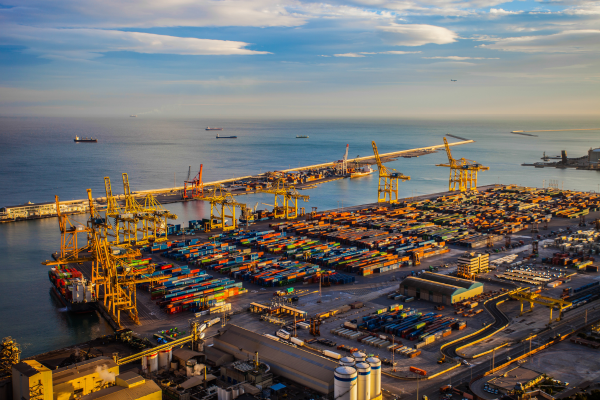
The greenfield Vadhvan Port, set to be constructed along the Palghar district coastline, will require reclaiming 3,500 acres of land from the sea. The reclamation process involves extracting sand from an offshore location, situated 50 km from the Daman coastline. Advertisement


Vadhavan Port Project Ltd (VPPL) announced earlier last week that it had obtained a mining licence for offshore sand reclamation, facilitating the port's development in Palghar district.
Situated near Dahanu town, approximately 140 km from Mumbai, Vadhavan Port is a greenfield deep-draft major port expected to become operational by 2029. The port will be constructed on an artificial island, featuring a harbour protected by breakwaters, enabling it to accommodate Ultra Large Container Ships (ULCS).
Once operational, Vadhvan Port will become India's 13th major container port. The project is being executed by Vadhavan Port Project Limited (VPPL), a special purpose vehicle established by the Jawaharlal Nehru Port Authority (JNPA) and the Maharashtra Maritime Board (MMB), with respective stakes of 74% and 26%.The development of the port is expected to cost around INR 76,000 crore.
The reclamation process requires dredging 200 million cubic metres of sand from a designated offshore area, located 60 km from the project site and 50 km off the Daman coast. The Ministry of Mines has allocated 10,277.1 hectares (102.77 sq. km) for this purpose.
A study conducted by IIT Madras, incorporating borehole testing and sample analysis, confirmed the suitability of the extracted sand for reclamation.
The estimated cost of sourcing 200 million cubic metres of sand from land-based sources stands at INR 12,000 crore, including INR 1,440 crore in royalties to the Union government. However, by utilising offshore sand, the project is expected to save approximately INR 6,000 crore, offering a more cost-effective alternative to land-based materials. Furthermore, offshore sand mining is considered to have a lower environmental impact compared to traditional land-based mining practices.
However, environmentalists have raised concerns regarding the ecological consequences of the project. They have cautioned that sand dredging could significantly impact the marine ecosystem along the Palghar and Daman coastlines, as the sea might not naturally replenish the extracted sand to compensate for the loss. Such extensive dredging could potentially alter water currents in the region as well.
This is not the first instance of coastal land reclamation in Maharashtra. The Navi Mumbai airport project required the reclamation of 2,867 acres, while the Mumbai Coastal Road project involves reclaiming approximately 70 hectares along Mumbai's shoreline for road construction.
While the economic benefits of cost-saving and increased trade capacity are evident, addressing ecological concerns and the displacement of fishermen remains crucial. The debate underscores the challenge of balancing economic progress with environmental sustainability.

5th Jun, 2025

25th May, 2023

11th May, 2023

27th Apr, 2023
Advertisement








 Facebook
 Whatsapp
