Advertisement










When should a housing society in Mumbai start considering re...
From GST on JDAs to SEBI’s REIT reclassification and the S...
Stay ahead in the world of real estate with our daily podcas...
Stay ahead in the world of real estate with our daily podcas...
The National Monetisation Pipeline-II (NMP-II) is set to expedite the monetisation of highway assets between FY26 and FY30, with a target of INR 3.5 lakh crore to be raised through leasing operational and other highway networks. This figure is over twice the estimated funds raised in the first phase (FY21-FY25). The ongoing monetisation process under NMP-I, which aimed for INR 1.6 lakh crore, has already achieved INR 1.2 lakh crore, with the remaining balance expected to be mobilised by the end of the financial year. The National Highways Authority of India (NHAI) has already raised INR 8,293 crore through the monetisation of two highway bundles.
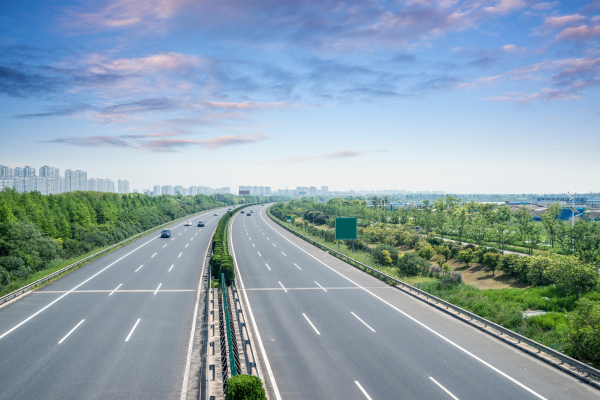
The monetisation of highway assets is expected to gain momentum under the National Monetisation Pipeline-II (NMP-II) project, scheduled to be executed between FY26 and FY30. The government aims to generate INR 3.5 lakh crore through leasing operational and other highway networks over the next five years. This amount is more than double the estimated revenue from the first phase of the National Monetisation Pipeline (FY21-FY25). Advertisement


The ongoing monetisation pipeline (NMP-I) set a target of INR 1.6 lakh crore, of which INR 1.2 lakh crore has already been raised. Additional Secretary at MoRTH, Vinay Kumar, mentioned that during March, the final month of the current financial year, efforts would be made to mobilise the balance amount to meet the target.
The initiative aims to reduce the debt burden of the National Highways Authority of India (NHAI) while ensuring a consistent pace of highway construction. Proceeds from monetisation will be reinvested in new projects, along with initiatives to attract private investment in the projects.
In March, eleven highway stretches were slated for monetisation via the National Highways Infrastructure Trust (NHIT), estimated to raise approximately INR 18,000 crore. Additionally, a monetisation round through the Toll Operate Transfer (ToT) model is also anticipated. So far, ToT, Infrastructure Investment Trusts (InvITs), and project-based financing have contributed almost equally to the monetisation process.
This year, the NHAI has already secured INR 8,293 crore through the monetisation of two highway bundles, covering a total length of 375 km. The first phase of the National Monetisation Pipeline had aimed to raise INR 6 lakh crore across multiple sectors, while the NMP-II, announced in the Budget for FY26, seeks to mobilise INR 10 lakh crore.
According to Kumar, the pool of highways available for monetisation is expanding rapidly, with an additional 8,000 km expected to be added this year. High-speed corridors and highways with four or more lanes are considered ideal candidates for monetisation.
Over the last decade, the length of four-lane and higher-category national highways has increased by more than 2.5 times, reaching 45,000-46,000 km from 18,000 km. The government also intends to extend the length of high-speed corridors to 50,000 km from the current 4,500 km.
Following the suspension of the Bharatmala Pariyojana, which focused on corridor-based highway development, the Ministry of Road Transport and Highways has formulated a network-based planning document called the Vision Document. This master plan focuses on development of efficient and equitable logistics. The strategy ensures that no location is more than 100 km from an expressway, with a reduced limit of 60 km in the Northeast region. The plan aims to expand the national highway network from 1.46 lakh km to 2 lakh km, primarily led by the addition of 50,000 km of expressways.
Over the next five to six years, approximately 18,000 km of expressways are expected to be constructed, with the remainder phased over the subsequent five to six years. By 2030-31, the high-speed corridor network is projected to grow from 4,500 km to 25,000 km, with the remaining expansion taking place over the next five years.
The ministry's capital expenditure has been consistently maintained at around INR 3 lakh crore for the past three years. Additionally, from FY26 onwards, private investment of INR 35,000 crore per annum is anticipated to further support highway infrastructure development.

5th Jun, 2025

25th May, 2023

11th May, 2023

27th Apr, 2023
Advertisement








 Facebook
 Whatsapp
