Advertisement










Private equity has played a significant role in shaping Indi...
In today’s real estate landscape, fitness is often treated...
In this episode of Prop Personalities, we sit down with Hars...
Luxury real estate is one of the most talked-about segments ...
Welcome to Prop Personalities by Prop News Time - a podcast ...
The Mumbai Metropolitan Region is addressing traffic and pollution challenges with a Certified Parking Area (CPA) policy requiring proof of parking for new four-wheeler registrations. Proposed by state transport commissioner Vivek Bhimanwar, the plan involves CPA certificates issued by the BMC and aims to curb congestion and promote urban mobility. Inspired by global models from cities like London and Tokyo, the policy will roll out alongside improved public transport. While experts warn of challenges, including parking disparities and potential misuse by builders, authorities are seeking public feedback to refine the policy. The initiative is a step toward sustainable urban living in Mumbai.
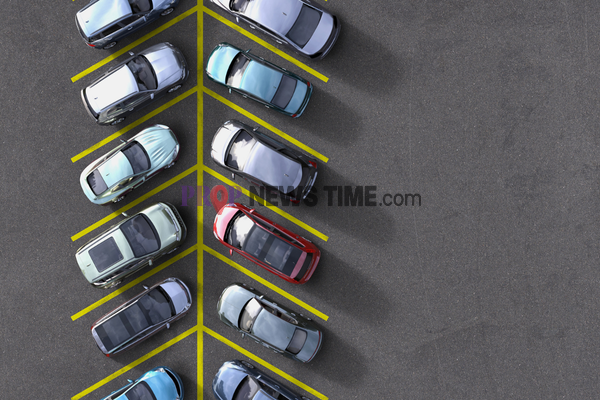
The Mumbai Metropolitan Region is facing significant traffic congestion and air pollution, prompting the state government to propose a new policy regarding vehicle registration. Under this plan, new four-wheeler owners will need to provide proof of a designated parking area-either public or private-when registering their vehicles. This initiative, known as the Certified Parking Area (CPA) policy, aims to address growing parking issues and improve urban mobility. Advertisement


The proposal, presented by state transport commissioner Vivek Bhimanwar to Chief Minister Devendra Fadnavis, is part of a broader 100-day transformation drive. The CPA certificate will be issued by the Brihanmumbai Municipal Corporation (BMC) and certified by the transport department. Bhimanwar emphasized the importance of this move, noting a recent surge in vehicle numbers leading to increased congestion and road rage incidents. Local authorities are expected to identify suitable parking lots as part of the implementation process.
The CPA policy will be rolled out in phases, coinciding with improvements to public transport infrastructure. The government is looking to models from cities like London, Tokyo, and Singapore, which have successfully managed traffic congestion through similar measures. For instance, New York City recently introduced a congestion pricing scheme, while Zurich has implemented time slots for parking to control vehicle flow. The state aims to adopt these best practices to create a more efficient urban transport system.
Local authorities will play a key role in identifying both public and private parking facilities. The transport department will oversee the implementation, ensuring cooperation among various stakeholders, including housing societies, urban development departments, and transport experts. Additionally, the policy will apply to new vehicles, while older cars will need to show proof of a CPA certificate when renewing fitness certificates.
While the CPA policy aims to alleviate traffic congestion, it faces potential challenges. A strong public transport network is essential to accommodate displaced vehicle traffic. Experts warn that the policy could be perceived as unfavorable to lower-income residents, particularly if it leads to disputes over limited public parking. A. V. Shenoy, a transport expert, highlighted the need for thorough discussions with all stakeholders to avoid backlash, noting that similar policies in the past faced resistance due to inadequate parking infrastructure in older buildings.
Critics also express concerns that the policy may favor builders, allowing them to profit by charging for parking spaces instead of providing them as part of housing developments. This could lead to further complications for residents in older buildings that lack sufficient parking. Bhimanwar acknowledged these concerns, stating that the policy is still in the conceptual phase and will be refined based on feedback from various stakeholders.
To ensure transparency and gather public input, the transport department plans to create an email address and social media channels for citizens to share their suggestions and comments. This approach aims to involve the community in the decision-making process and address any concerns that may arise during implementation.
As Mumbai continues to grapple with traffic issues and environmental challenges, the proposed CPA policy represents a significant step toward creating a more sustainable urban environment. By encouraging responsible vehicle ownership and improving public transport options, the government hopes to enhance the quality of life for residents while reducing pollution and congestion in the city.

5th Jun, 2025

25th May, 2023

11th May, 2023

27th Apr, 2023
Advertisement





 Facebook
 Whatsapp
