Advertisement










Private equity has played a significant role in shaping Indi...
In today’s real estate landscape, fitness is often treated...
In this episode of Prop Personalities, we sit down with Hars...
Luxury real estate is one of the most talked-about segments ...
Welcome to Prop Personalities by Prop News Time - a podcast ...
The Gurgaon Metro, known as the Rapid Metro Gurgaon, is a modern urban transit system that enhances connectivity within Gurugram and links seamlessly to the Delhi Metro network. Launched in 2013 and expanded by 2017, the 12.85 km line with 11 stations efficiently serves key residential, commercial, and industrial areas. Managed by HMRTC and integrated with the Delhi Metro's Yellow Line at Sikanderpur, it has reduced road congestion, boosted property values, and supported economic growth. With plans for a new 28.5 km line to further expand coverage, the Gurgaon Metro exemplifies how reliable, eco-friendly public transport can shape a city's future.
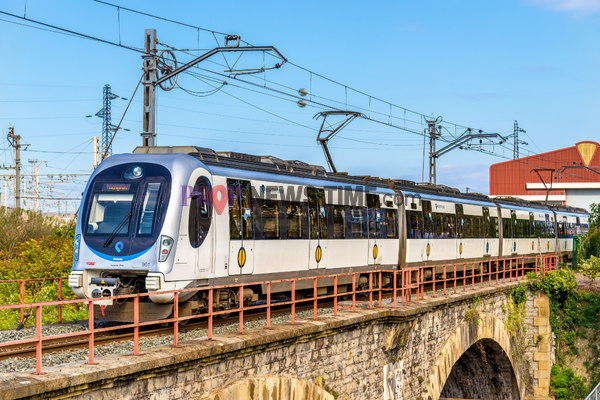
The Gurgaon Metro, also known as the Rapid Metro Gurgaon, has emerged as a key component of urban transportation in Gurugram, Haryana. Serving as a modern and efficient transit system, the Rapid Metro plays a vital role in enhancing connectivity within Gurugram and linking it seamlessly to the broader Delhi Metro network. Managed by the Haryana Mass Rapid Transport Corporation Limited (HMRTC), this metro system has significantly eased the burden on road traffic, provided a reliable public transport option, and stimulated economic development in the region. Advertisement


The idea for the Rapid Metro Gurgaon was conceived to address the growing transportation demands of Gurugram, a city that has rapidly evolved into a major hub for business and technology. Developed by Rapid MetroRail Gurgaon Limited (RMGL), a consortium led by Infrastructure Leasing & Financial Services Limited (IL&FS), this project stands out as the world's first fully privately financed modern light metro system. The foundation stone was laid in August 2009, and the first phase became operational on November 14, 2013.
The initial stretch of the Rapid Metro spanned 5.1 kilometres with six stations, connecting the key business and residential sectors of Gurugram. The second phase, covering an additional 7.5 kilometres and five stations, was inaugurated on March 31, 2017. This expansion brought the total network length to 12.85 kilometres with 11 operational stations. The project was completed with an investment of approximately INR 2,143 crore for both phases.
The Rapid Metro's route forms a loop, connecting key areas within Gurugram. The line begins at Sector 55-56 and proceeds through stations including Sector 54 Chowk, Sector 53-54, Sector 42-43, Phase 1, and Sikanderpur, where it interchanges with the Delhi Metro's Yellow Line. From Sikanderpur, it continues to Phase 2, Belvedere Towers, Cyber City, Moulsari Avenue, and culminates at Phase 3.
The Sikanderpur Station serves as a crucial interchange, allowing passengers to connect seamlessly with the Delhi Metro's Yellow Line. This integration facilitates efficient travel between Gurugram and key locations in Delhi, making the Rapid Metro an essential part of the National Capital Region's (NCR) transportation ecosystem.
The Rapid Metro operates from 6:00 AM to 10:00 PM daily, with trains running at intervals of about 4 minutes during peak hours. Each train consists of three coaches, designed to accommodate a large number of passengers comfortably. The system operates on standard gauge tracks and is powered by a 750 V DC third rail electrification system.
The Rapid Metro offers modern amenities, including: Air-conditioned coaches for passenger comfort, Smart ticketing systems with contactless payments, Real-time tracking through mobile applications and CCTV surveillance and security personnel to ensure passenger safety
Since its launch, the Rapid Metro Gurgaon has steadily grown in popularity. In the financial year 2024-25, the metro recorded a 10.49% increase in revenue, reaching INR 8.11 crore in the first quarter compared to the previous year. This growth was driven by an 8.75% rise in ridership, with monthly passenger numbers peaking at 13.48 lakh in May 2024. The highest single-day ridership reached 56,168 passengers in January 2023.
Despite initial challenges in attracting consistent ridership, the metro has become an indispensable part of daily commutes for office-goers, students, and residents of Gurugram's bustling neighborhoods.
The Rapid Metro faced financial difficulties when its original developer, IL&FS, encountered bankruptcy issues. As a result, in October 2019, the operations were officially taken over by the Delhi Metro Rail Corporation (DMRC) under the direction of the Haryana Government. The transition ensured the continued operation of the metro service and the maintenance of service quality. The Haryana Mass Rapid Transport Corporation Limited (HMRTC) now oversees the metro's development and future expansions.
To enhance connectivity further, a new 28.5-kilometre elevated metro line was approved by the Union Cabinet in June 2023. This line will connect HUDA City Centre with DLF Cyber City, passing through 27 new stations. The project, estimated to cost INR 5,452 crore, aims to link New Gurugram with Old Gurugram, covering key areas like Sector 9, Sector 10, Pataudi Road, and Udyog Vihar. The expansion is expected to be completed within four years and will significantly boost Gurugram's public transport infrastructure.
The Rapid Metro Gurgaon has played a pivotal role in shaping the city's infrastructure and improving quality of life for residents and commuters. Its presence near key commercial and residential hubs like Cyber City, Golf Course Road, and the DLF Phase areas has led to appreciable increases in property values and spurred extensive real estate development. Beyond fostering a more vibrant urban fabric, the metro offers a dependable, efficient alternative to private vehicles, thereby alleviating congestion on major thoroughfares such as MG Road and Golf Course Road. This shift in transportation habits also translates into environmental advantages, as fewer cars on the road result in reduced carbon emissions, ultimately contributing to a healthier, more sustainable urban environment.
The Rapid Metro Gurgaon is a symbol of modern urban transit, addressing the mobility needs of one of India's fastest-growing cities. Its integration with the Delhi Metro, continuous ridership growth, and ambitious expansion plans highlight its importance in the broader NCR transportation network. Despite facing challenges, the metro has proven resilient and continues to serve as a critical link for commuters. With upcoming extensions and enhanced infrastructure, the Gurgaon Metro is poised to play an even greater role in shaping the future of urban mobility in the region.

5th Jun, 2025

25th May, 2023

11th May, 2023

27th Apr, 2023
Advertisement





 Facebook
 Whatsapp
