Advertisement










When should a housing society in Mumbai start considering re...
From GST on JDAs to SEBI’s REIT reclassification and the S...
Stay ahead in the world of real estate with our daily podcas...
Stay ahead in the world of real estate with our daily podcas...
The Mumbai-Pune "missing link" project, expected to complete by August 2025, is aimed at improving the Mumbai-Pune Expressway by reducing the distance between the two cities and cutting travel time by 30 minutes. The project, costing INR 6,600 crore, has faced multiple delays due to engineering challenges and the difficult terrain. Key components like tunnels and viaducts are in place, with ongoing work on the second viaduct. The project is designed to enhance safety and reduce accidents, particularly in the hazardous ghat section, while also addressing seasonal disruptions caused by falling debris.
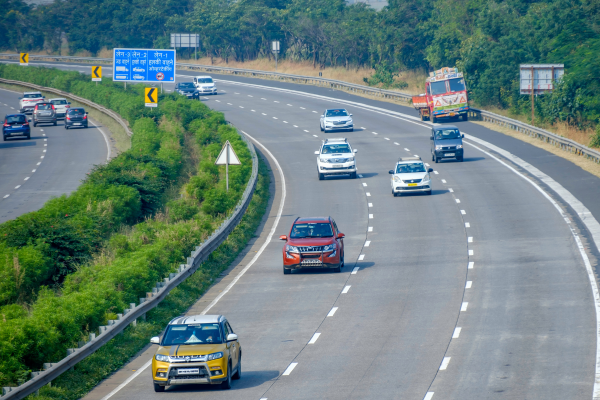
The Mumbai-Pune "missing link" project now has a revised deadline of August 2025, with 92% of the work already completed. The 13-kilometre stretch, which cuts across the existing Mumbai-Pune Expressway, will reduce the distance between the two cities by 5.7 kilometres and cut travel time by approximately 30 minutes. Advertisement


The project, estimated to cost INR 6,600 crore, has experienced several deadline extensions, initially planned for completion in March 2024, then postponed to January 2025, and most recently extended to March 2025. The delays are attributed to the project's challenging terrain and the complex engineering feats required.
A senior official from the Maharashtra State Road Development Corporation (MSRDC) highlighted that, although the progress has been steady, the team is proceeding with caution. The official mentioned that while tunnels and one viaduct are complete, the second viaduct, which is particularly tricky due to its location over a valley, is still under construction. The second viaduct is a cable-stayed bridge, reaching a height of 100 meters above the Khandala Valley. The immense scale of this structure, along with other engineering challenges, has contributed to the time-consuming nature of the project.
Despite the delays, construction has not affected traffic flow on the existing Mumbai-Pune Expressway, one of the busiest roads in India. MSRDC has ensured minimal disruption by carefully managing the work. The official further mentioned that the viaduct and tunnel from the project are now being used to access the second viaduct construction site.
Starting at Khopoli, the project features an 840-meter viaduct, a 1.75-kilometre tunnel, and a 640-meter cable-stayed bridge, which reaches 100 meters above the Tiger Valley in the Lonavala-Khandala section. The route continues through another 8.9-kilometre tunnel, some parts of which are as deep as 170 feet below ground, with Lonavala Lake resting above it. This new alignment will significantly reduce travel time.
The project also focuses on safety. Officials have emphasized that one of the primary goals is to transform the Mumbai-Pune Expressway into a "zero-fatality corridor" to reduce accidents, particularly in the notorious ghat sections. Additionally, the project aims to address recurring traffic jams caused by falling boulders and debris during the monsoon season. With advanced engineering solutions, MSRDC hopes to eliminate these disruptions, offering smoother and safer travel for commuters.
The Mumbai-Pune "missing link" project, with a revised deadline of August 2025, is set to greatly improve connectivity between the two cities. While the project has faced delays due to complex terrain and engineering challenges, it promises to reduce travel time and enhance road safety. The new infrastructure will not only address existing traffic and safety issues but also provide a smoother, more secure route for travelers, particularly by reducing accidents in the treacherous ghat areas. The project represents a significant investment in the future of India's transport infrastructure.

5th Jun, 2025

25th May, 2023

11th May, 2023

27th Apr, 2023
Advertisement








 Facebook
 Whatsapp
