Advertisement










When should a housing society in Mumbai start considering re...
From GST on JDAs to SEBI’s REIT reclassification and the S...
Stay ahead in the world of real estate with our daily podcas...
Stay ahead in the world of real estate with our daily podcas...
The Indore Municipal Corporation (IMC) is undertaking 22 major road and riverside projects but faces a crisis in relocating 6,000 affected families, with only 200 flats available. Of 2,875 structures marked for road expansion, only 5-7% will be fully demolished. The IMC has received INR 511 crore under the National Mission for Clean Ganga for river rejuvenation, requiring the removal of nearly 3,000 homes. While 1,047 PMAY flats are under construction, additional housing solutions are being explored. The challenge underscores the city's struggle to balance infrastructure growth with housing needs, prompting calls for better relocation planning.
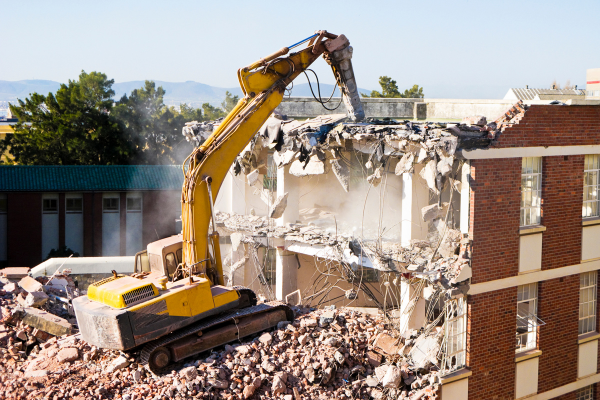
The Indore Municipal Corporation (IMC) is currently navigating a significant challenge as it embarks on the construction of 22 major roads and riverside development projects. The corporation has identified approximately 6,000 residential structures that stand in the way of these developments. However, there are only about 200 flats available to relocate the families affected by these construction efforts, raising concerns about adequate housing for those displaced. Advertisement


The IMC's efforts include addressing both residential and commercial properties, with a total of 2,875 structures identified as obstacles to road construction. Additionally, 97 religious structures are also slated for removal. The riverside development is particularly pressing, as nearly 3,000 residential buildings are located within 30 meters of the highest flow level of the Saraswati and Kanh Rivers, necessitating their removal to facilitate the rejuvenation project.
To support these initiatives, the IMC has received a substantial allocation of INR 511 crore under the National Mission for Clean Ganga (NMGC). This funding is aimed at improving the river's health and surrounding infrastructure. Despite this financial backing, the limited availability of housing units has forced the IMC to prioritize road construction over the immediate relocation of affected families.
IMC Commissioner Shivam Verma emphasized the importance of completing the road projects to ease traffic congestion and improve commuter access. He noted that while around 3,000 structures are targeted for the widening and construction of roads, only about 5-7% of these will be completely demolished. Families whose homes are entirely razed will be eligible for the available flats, with a survey planned to assess their needs.
In addition to the 1,047 one-BHK flats being constructed under the Pradhan Mantri Awas Yojana (PMAY) scheme, the IMC is also working on separate housing units for those displaced by the riverside development project. A proposal will be submitted to relevant agencies to secure additional housing solutions for these families.
The situation highlights the broader issue of urban development in Indore, where rapid growth often clashes with the need for adequate housing. As the city continues to expand, the IMC faces the challenge of balancing infrastructure improvements with the welfare of its residents. Community leaders and residents alike are calling for more proactive measures to ensure that those affected by these projects are not left without homes.
In conclusion, while the IMC is making strides in infrastructure development, the lack of available housing for displaced families remains a critical concern. The corporation's commitment to prioritizing road construction must be matched with a robust plan to address the housing needs of those impacted, ensuring that progress does not come at the expense of community stability. As the situation evolves, ongoing communication and collaboration between the IMC, residents, and stakeholders will be essential in navigating these challenges effectively.

5th Jun, 2025

25th May, 2023

11th May, 2023

27th Apr, 2023
Advertisement








 Facebook
 Whatsapp
