Advertisement






The Gulf conflict has disrupted global supply chains, pushed...
REITs have changed the way commercial real estate is owned a...

What does it take to preserve a real estate legacy while bui...
What really powers the cloud? Behind every Google search, A...
A lot of what defines a home isn’t visible at handover. I...
India has experienced a dramatic increase in vehicle ownership, rising from 7 million cars in the early 2000s to 30 million by 2020, with projections suggesting up to 60 million by 2030. This surge has prompted the evolution of parking solutions, shifting from traditional garages to advanced mechanised systems. However, these innovations often compromise user convenience and accessibility, particularly in luxury residential complexes. Enclosed garages remain the gold standard, while enclosed and open parking spaces with direct access are preferable to fully automated systems, which are costly and inconvenient. As electric vehicles (EVs) gain popularity, parking solutions that can adapt easily to future needs will hold greater value than mechanised alternatives reliant on technology.
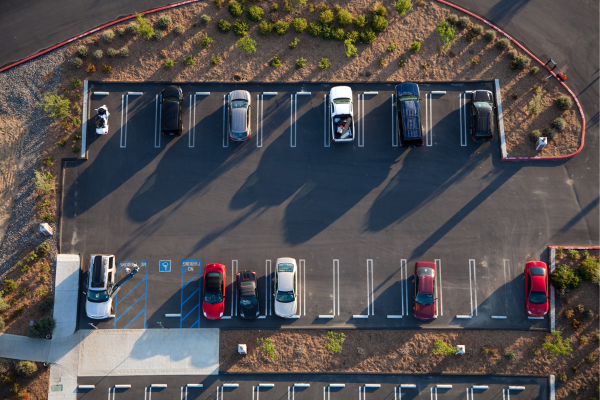
In the early 2000s, India had approximately 7 million cars on its roads. Economic liberalisation, a burgeoning middle class, and increased consumerism have led to a significant growth in vehicle ownership since then. In 2020, the total number of vehicles on the road in India reached 30 million. Experts believe this number could increase to anywhere between 40 million and 60 million in the coming decade. Advertisement






To accommodate the surge in vehicles, parking solutions have evolved significantly. Initially, most residential buildings provided garages and ground-level parking spaces. This gradually shifted to multi-level and mechanised parking solutions. In recent years, several high-density residential buildings have adopted automated parking solutions such as puzzle parking, conveyor parking, and automated guided vehicle (AGV) systems to maximise space efficiency.
While the latest innovations have addressed space constraints, what has deteriorated for users is the quality and convenience of parking spaces. The type of parking space available and how easily accessible it is can make a significant difference to the perceived value of a property in a complex, especially so in the case of luxury apartments. The National Building Code stipulates that a parking space for a four-wheeler must be at least 13.75 square meters and for a two-wheeler it must be at least 1.25 square meters. In spite of such measures being in place, it is common to find builders providing compact parking spaces that comprise vehicle access and safety.
A garage, now far and few, is the ultimate symbol of luxury when it comes to parking. This is because it provides an enclosed space for your vehicle, protecting it from external environmental factors and possible theft. The next best option is an enclosed parking space. This can be at a ground level, basement level or within multi-level parking floors accessible by a ramp. Open parking spaces expose your vehicle to the natural elements, making it subpar in comparison to enclosed spaces. However, open parking spaces that can be accessed directly or via ramps are still better options than mechanised solutions.
Mechanised and automated parking systems are the least desirable. As a vehicle owner, you want to be able to access your vehicle at your convenience and through minimal intervention. Instead, such systems force you to rely on technology such as car lifts, cranes and conveyor belts. Thus, even with a chauffeur, reaching the vehicle becomes both tedious and time-consuming. It is also difficult to wash, service and maintain your car within the building premises on account of limited space and accessibility.
The model bylaws by the Ministry of Housing and Urban Affairs state that all residential properties must consider a minimum of two Equivalent Car Spaces (ECS) per 100 square meters of residential floor area. In addition, all residential complexes must allocate a minimum of 5 per cent of the total parking area for visitors.In commercial and industrial complexes, the prevalent zoning laws dictate the volume and type of parking to be created in a building based on its use. Such buildings are also required by law to cater to those with disabilities and abide by certain environmental standards to minimise congestion and ensure ecological preservation.
In India, the use of technology in parking must be considered alongside existing environmental factors such as weather conditions, erratic power supply and poor maintenance services. When this is overlooked, users often end up having to suffer the consequences. Semi and fully automated systems may work for commercial spaces but must be avoided in residential complexes. Such solutions increase maintenance costs without an offset of convenience or space, something users must be made aware of beforehand.
As consumer preferences shift towards EV vehicles, residential buildings with semi or full-automated parking systems will struggle to adapt. EV vehicles require more space, easier access and electrical service points to set up charging stations. Further, parking ordinances may dictate safety features for EV charging spaces, such as proper lighting, signage, and physical barriers to protect charging equipment from damage. Additionally, there may be regulations regarding the maximum time an EV can occupy a charging space, ensuring turnover and availability for other users. If so, buildings with mechanised systems and limited space will struggle to cope.
In the next decade, India is expected to have around 35 cars for every 1,000 people. Research indicates a positive relationship between increasing incomes, homeownership, and vehicle ownership, highlighting the need for improved parking solutions. In this context, it is essential to look for complexes that have robust parking systems that can easily adapt to current and future needs. Premiums, if paid, must be for direct access, enclosed spaces and EV-friendly solutions rather than fancy mechanised systems that are over-reliant on technology.
The views, opinions, and information expressed in this article are solely those of the author and do not necessarily reflect the views of Prop News Time. The content has not been independently verified or endorsed by Prop News Time. Readers are advised to exercise their own discretion and seek professional advice if required.
Advertisement













 Facebook
 Whatsapp
