Advertisement










Private equity has played a significant role in shaping Indi...
In today’s real estate landscape, fitness is often treated...
In this episode of Prop Personalities, we sit down with Hars...
Luxury real estate is one of the most talked-about segments ...
Welcome to Prop Personalities by Prop News Time - a podcast ...
The Navi Mumbai International Airport (NMIA), a INR 16,700 crore project, is set to revolutionize air travel in the Mumbai Metropolitan Region. Spanning 1,160 hectares in Ulwe, NMIA will feature two parallel runways and four terminals, handling 90 million passengers annually upon full completion. Developed by Adani Airports and CIDCO, the first phase is expected to be operational by March 2025, accommodating 20 million passengers. Designed by Zaha Hadid Architects, the airport integrates seamlessly with key infrastructure projects like the Mumbai Trans Harbour Link and express metro, boosting regional connectivity, economic growth, and trade capabilities in Navi Mumbai and beyond.
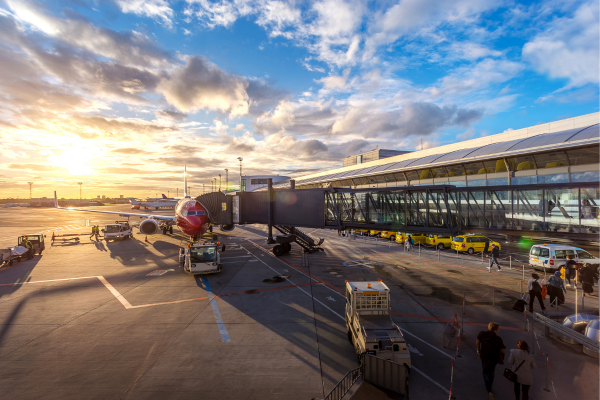
The Navi Mumbai International Airport (NMIA) is a landmark greenfield project designed to alleviate the increasing congestion at Mumbai's Chhatrapati Shivaji Maharaj International Airport (CSMIA). Strategically located in Ulwe, Navi Mumbai, the airport spans approximately 1,160 hectares, making it one of India's most significant aviation developments. The project is a collaborative endeavor between Adani Airports Holdings Limited and the City and Industrial Development Corporation (CIDCO), developed under a public-private partnership model. The foundation stone was laid by Prime Minister Narendra Modi on February 18, 2018, marking the commencement of this ambitious initiative. Advertisement


The total estimated cost of NMIA is around INR 16,700 crore (approximately USD 2 billion), reflecting the project's scale and significance. Upon completion, the airport will feature two parallel runways, each measuring 3,700 meters in length, and four state-of-the-art terminals designed to handle up to 90 million passengers annually. Additionally, it is equipped to process 2.6 million tonnes of cargo, significantly enhancing the region's logistics and trade capabilities.
The development of NMIA is planned in phases to ensure scalable expansion and smooth operations. In Phase 1, the construction includes a single runway and a terminal capable of accommodating 20 million passengers per year. This terminal will primarily serve low-cost carriers and will feature modern amenities such as food courts, lounges, and travelators to enhance passenger comfort. Phase 2 involves the addition of a second terminal, increasing the airport's capacity by an additional 30 million passengers annually. The final phases aim to achieve the airport's ultimate capacity of 90 million passengers per year, with a focus on significantly enhancing cargo handling capabilities to support growing trade demands.
The architectural design of NMIA is being undertaken by the globally renowned Zaha Hadid Architects. The terminal buildings draw inspiration from the lotus flower, combining functionality with aesthetic brilliance to create an iconic design. Dedicated cargo terminals are integral to the airport's design, with the domestic cargo terminal covering an area of 33,000 square meters and the international terminal spanning 23,700 square meters, bolstering regional trade and logistics.
NMIA is poised to become a significant driver of economic growth for the Navi Mumbai region and its surrounding areas. Improved connectivity will significantly reduce travel times for residents in Mumbai's suburbs, including Thane and Panvel, transforming lengthy commutes into manageable journeys. Local industries, especially those in Pune's Chakan and Talegaon industrial belts, stand to benefit from enhanced logistics and reduced transit times, supporting manufacturing and trade growth. Both the construction and operational phases of the airport are expected to generate a substantial number of direct and indirect jobs, further stimulating the local economy.
The integration of NMIA into Mumbai's broader infrastructure network is a key aspect of its development. A host of connectivity projects are planned or under construction to ensure seamless access. An express metro line will link NMIA with CSMIA, facilitating easy transfers between the two airports. The under-construction Mumbai Trans Harbour Link (MTHL) will provide a direct connection between Navi Mumbai and South Mumbai, significantly reducing travel times. Additionally, the airport is expected to benefit from proposed high-speed rail projects, such as the Mumbai-Hyderabad bullet train, ensuring rapid transit options for travelers.
As of early 2025, NMIA is on track to commence operations, with the first phase expected to be operational by March 2025. The airport's development is anticipated to revolutionize air travel in the Mumbai Metropolitan Region by providing much-needed capacity relief for the overburdened CSMIA. With its cutting-edge facilities, strategic location, and seamless connectivity, NMIA is set to elevate passenger convenience and serve as a catalyst for regional economic growth, marking a new chapter in India's aviation sector.

5th Jun, 2025

25th May, 2023

11th May, 2023

27th Apr, 2023
Advertisement





 Facebook
 Whatsapp
