Advertisement






What really powers the cloud? Behind every Google search, A...
A lot of what defines a home isn’t visible at handover. I...
Private equity has played a significant role in shaping Indi...
Luxury real estate is one of the most talked-about segments ...
Airports play a much bigger role than just enabling travel -...
The Chennai Metro, operational since 2015, has evolved into a pivotal mass transit system in Tamil Nadu's capital. Managed by Chennai Metro Rail Limited (CMRL), it currently spans over 54 km, offering rapid and reliable transportation through a combination of elevated and underground stations. Phase I, completed by 2019 at a cost of around INR 14,600 crore, introduced two main corridors and improved travel efficiency. An extension to Wimco Nagar, completed in 2021, further enlarged its coverage. Phase II, set for completion by 2026 at a cost of INR 61,843 crore, will add nearly 119 km. Despite challenges in construction, fare structure, and ridership targets, the Chennai Metro continually enhances passenger experience through modern amenities, digital ticketing, and accessibility features, reflecting the city's commitment to advanced public transit solutions.
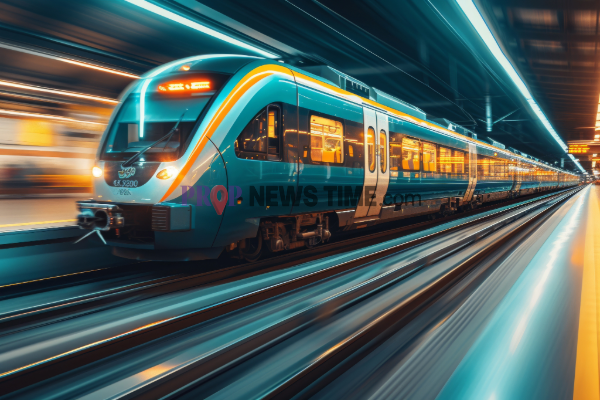
The Chennai Metro, a landmark achievement in Tamil Nadu's capital city, has played a crucial role in modernizing urban transit since its inception. This rapid transit system, operated by Chennai Metro Rail Limited (CMRL), has significantly improved connectivity, reduced traffic congestion, and provided a sustainable transportation option for residents. The system currently spans 54.1 kilometres, with ambitious plans for future expansion to accommodate the growing population and increasing demands for efficient public transportation. Advertisement






The idea for a metro system in Chennai took shape in the early 2000s as a solution to the city's burgeoning traffic and urban sprawl. Planning for the project began in 2007, and construction officially started in February 2009. The Phase I network, comprising two corridors, was completed in stages and fully operational by February 2019.
The first stretch, Alandur to Koyambedu, was inaugurated on June 29, 2015. The completion of Phase I saw the launch of two key corridors: Corridor I (Blue Line) from Washermenpet to the Airport, covering 23.085 kilometres, and Corridor II (Green Line) from Chennai Central to St. Thomas Mount, spanning 21.961 kilometres. These corridors feature a combination of elevated and underground stations, providing seamless transit across various parts of the city. The total cost for Phase I was approximately INR 14,600 crore, financed through a mix of government funding and loans from the Japan International Cooperation Agency (JICA).
Today, the Chennai Metro consists of a two-line network spanning 54.1 kilometres with 32 stations. The system includes 13 elevated and 19 underground stations. The Blue Line (Corridor I) stretches from Washermenpet in North Chennai to the Chennai International Airport in the south. The Green Line (Corridor II) runs from Chennai Central to St. Thomas Mount, connecting key residential and commercial hubs.
In addition, the Phase I Extension, completed in February 2021, added 9.05 kilometres from Washermenpet to Wimco Nagar, further extending the Blue Line to the northern suburbs of the city. This extension, costing INR 3,770 crore, aimed to serve the industrial and residential regions of North Chennai and ease the burden on the existing suburban train network.
Chennai Metro's Phase II is an ambitious project that will add 118.9 kilometres to the network, with an estimated cost of INR 61,843 crore. Approved in 2019, Phase II comprises three major corridors: Corridor III from Madhavaram to SIPCOT, covering 45.8 kilometres. Corridor IV from Lighthouse to Poonamallee Bypass, spanning 26.1 kilometres, and Corridor V from Madhavaram to Sholinganallur, extending 47 kilometres.
These new lines aim to connect the city's suburbs, business districts, and IT hubs, reducing travel times and improving access to employment centers. Phase II is expected to be completed by 2026, with funding from multiple sources, including international agencies like JICA and the Asian Infrastructure Investment Bank (AIIB).
The Chennai Metro uses standard gauge tracks and a 25 kV AC overhead catenary system for electrification, allowing trains to reach speeds of up to 80 km/h. The metro trains, supplied by Alstom and Hyundai Rotem, feature modern, air-conditioned coaches equipped with automated train control and passenger information systems. Each train can accommodate around 1,000 passengers, ensuring a comfortable commute even during peak hours.
To improve passenger convenience, stations are equipped with amenities such as elevators, escalators, tactile flooring for visually impaired passengers, and real-time train tracking systems. In addition, digital payment options, including mobile QR codes, WhatsApp ticketing, and discounts for smart card users, have made commuting more seamless and efficient.
Despite its successes, the Chennai Metro has faced several challenges. Land acquisition in densely populated areas, construction delays, and coordination between multiple agencies have slowed progress. The metro also struggles with low ridership compared to initial projections. In 2023, Chennai Metro recorded 9.11 crore passengers, a significant increase from 6.09 crore in 2022. However, the current daily ridership of around 2.5 lakh remains well below the projected 12 lakh commuters per day by 2026.
Factors affecting ridership include limited last-mile connectivity, competition from the suburban rail network and bus services, and the relatively high fare structure. To address these issues, CMRL is focusing on improving connectivity, adding more trains, and introducing fare discounts to attract more commuters.
The financial trajectory of the Chennai Metro reflects the challenges in achieving operational profitability. In the 2020-21 fiscal year, CMRL reported a loss of INR 32 crore, distinguishing it as the only metro system among its peers in Delhi, Mumbai, and Bengaluru to record a deficit during that period.
In an effort to meet growing demand, improve connectivity, and enhance overall service appeal, the Chennai Metro Rail Limited (CMRL) has undertaken a series of strategic initiatives. Chief among these is the ongoing Phase II expansion, aimed at extending the network by approximately 118.9 kilometres at an estimated investment of INR 61,843 crore. This substantial enlargement is anticipated to boost accessibility and cater to a wider spectrum of commuters, thus improving ridership and reducing reliance on other modes of transport. Complementing these infrastructural efforts, the Tamil Nadu government plans to procure an additional 28 train sets to address future demand and alleviate peak-hour congestion.
Moreover, CMRL has introduced fare discounts, offering a 20% concession across multiple ticketing options such as Metro travel cards and mobile QR code tickets, thereby incentivizing patrons to shift towards more efficient and eco-friendly public transportation. The integration of digital platforms like WhatsApp ticketing and Paytm further enhances convenience, ensuring that the transit experience aligns with contemporary commuter preferences.
Chennai Metro is committed to sustainability and has implemented several eco-friendly initiatives. The system uses regenerative braking technology, which helps save energy by converting kinetic energy into electrical energy during braking. Stations have rainwater harvesting systems, and solar panels have been installed at multiple locations to reduce reliance on conventional power sources.
The Chennai Metro is a testament to the city's commitment to modernizing its transportation infrastructure. With a well-planned expansion in progress and a focus on sustainability and passenger convenience, the metro system is poised to become an even more critical component of Chennai's urban fabric. Despite challenges, ongoing efforts to improve connectivity, increase ridership, and ensure financial sustainability highlights a forward-looking approach. As the network grows, the Chennai Metro will continue to play a pivotal role in shaping the city's future, offering a seamless and eco-friendly commuting experience for millions.
Advertisement













 Facebook
 Whatsapp
