Advertisement






What really powers the cloud? Behind every Google search, A...
A lot of what defines a home isn’t visible at handover. I...
Private equity has played a significant role in shaping Indi...
Luxury real estate is one of the most talked-about segments ...
Airports play a much bigger role than just enabling travel -...
The Surat Metro, a transformative mass rapid transit system, is poised to revolutionize urban mobility in Surat, one of India's fastest-growing cities. Approved in 2019 with a budget of INR 12,020.32 crore, the project addresses traffic congestion and pollution in the booming textile and diamond hub. Phase I spans 40.35 km, comprising two corridors: the Red Line (21.61 km) and the Green Line (18.74 km), featuring 38 strategically placed stations. Co-funded by the Indian and Gujarat governments, with support from international lenders, the metro integrates modern amenities, accessibility features, and seamless connectivity. Set to serve 1.5 million daily commuters, it aims to enhance Surat's economic growth, reduce pollution, and promote sustainable, inclusive urban development.
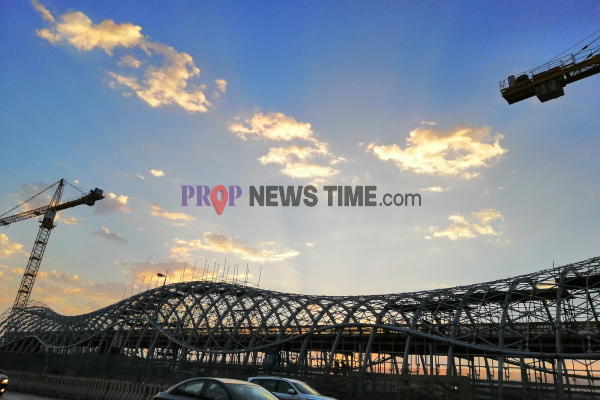
The Surat Metro is a transformative mass rapid transit system designed to modernize urban mobility in Surat, one of India's fastest-growing cities. With its booming textile and diamond industries, Surat has witnessed a rapid influx of population, leading to increased traffic congestion and pollution. To address these challenges and provide a reliable public transportation system, the Gujarat Metro Rail Corporation (GMRC) is developing the Surat Metro, a project that promises to enhance connectivity, reduce travel time, and contribute to sustainable urban growth. Advertisement






The Surat Metro project, approved by the Government of India in March 2019, is being developed at an estimated cost of INR 12,020.32 crore. This ambitious infrastructure project is part of the broader vision of creating modern public transport systems in Tier-2 cities. Phase I of the Surat Metro spans 40.35 kilometres and includes two major corridors: the Red Line (Corridor 1) and the Green Line (Corridor 2). Together, these corridors will feature a total of 38 stations, comprising both elevated and underground sections strategically designed to serve the city's key areas.
The Red Line (Corridor 1) stretches over 21.61 kilometres, connecting Sarthana in the northeast to Dream City in the southwest. This corridor includes a mix of elevated and underground sections. Out of the 14 elevated stations, the line covers 15.14 kilometres above ground, while the 6 underground stations span 6.47 kilometres. Major stations along this route include Sarthana Nature Park, Kapodra, Surat Railway Station, and Dream City. This corridor is particularly significant as it passes through some of Surat's busiest areas, including commercial hubs, residential zones, and key transport nodes like the railway station.
The Green Line (Corridor 2) covers 18.74 kilometres, connecting Bhesan to Saroli. This entirely elevated corridor comprises 18 stations and is designed to cater to the city's western and southern regions. Important stations on this line include LP Savani School, Athwa Chopati, and Saroli. This corridor is expected to ease the commute for thousands of residents living in the fast-developing suburbs of Surat.
The funding for the Surat Metro is a collaborative effort between the Government of India and the Government of Gujarat, each contributing 50% of the equity. To ensure smooth financial flow, international agencies such as the Agence Francaise de Developpement (AFD) and KfW Development Bank have provided loans to support the project's development. The investment reflects a strong commitment to improving urban infrastructure and promoting sustainable public transport.
Construction work for the Surat Metro began in January 2021, and significant progress has been made since then. As of December 2024, tunnel boring work for the underground sections is advancing rapidly, with over 1.5 kilometres of tunneling completed. The underground stations between Kapodara and Dream City are also nearing completion. The first operational segment between these two points is expected to launch by December 2024, with full-scale operations for Phase I anticipated by March 2025.
The Surat Metro is set to revolutionize urban mobility by reducing traffic congestion and offering a cleaner, greener mode of transport. It is estimated that the metro will cater to 1.5 million commuters daily once fully operational. By encouraging people to switch from private vehicles to public transit, the metro will help decrease pollution levels and promote environmental sustainability. This is crucial for a city like Surat, which has been grappling with rising pollution due to industrial activities and vehicular emissions.
One of the standout features of the Surat Metro is its modern infrastructure. The trains will be equipped with air-conditioning, CCTV surveillance, and automated fare collection systems to ensure a safe and comfortable journey for passengers. Stations will feature escalators, elevators, and facilities for differently-abled individuals, promoting inclusivity and accessibility. Additionally, the metro system will be integrated with the city's existing bus services to ensure seamless last-mile connectivity.
The impact of the Surat Metro extends beyond transportation. Improved connectivity is expected to boost the city's economic development by attracting investments, increasing real estate values along the metro corridors, and creating job opportunities during construction and operational phases. The metro will also enhance Surat's reputation as a progressive and forward-thinking city, aligning with the state's vision for smart urban growth.
Despite the promising outlook, the project has faced its share of challenges, including delays caused by land acquisition issues, the COVID-19 pandemic, and logistical complexities. However, the perseverance of the authorities and collaboration with experienced contractors like Larsen & Toubro (L&T) have ensured that the project stays on track.
In conclusion, the Surat Metro is more than just a public transport project; it is a symbol of the city's aspirations for a modern and sustainable future. With its comprehensive network, modern amenities, and focus on environmental sustainability, the metro promises to transform daily commutes and improve the quality of life for Surat's residents. As the project nears completion, it stands as a testament to what strategic planning, innovation, and determination can achieve in the realm of urban infrastructure. The Surat Metro is set to become the lifeline of the Diamond City, paving the way for a more connected and vibrant urban landscape.

5th Jun, 2025

25th May, 2023

11th May, 2023

27th Apr, 2023
Advertisement









 Facebook
 Whatsapp
