Advertisement








When should a housing society in Mumbai start considering re...
From GST on JDAs to SEBI’s REIT reclassification and the S...
Stay ahead in the world of real estate with our daily podcas...
Stay ahead in the world of real estate with our daily podcas...
The inauguration of the Jammu railway division and the imminent launch of a direct train service between New Delhi and Srinagar herald a new chapter in connectivity for Jammu and Kashmir. Alongside railway advancements, the operationalisation of the Banihal bypass, part of a major highway four-laning project, aims to ease travel and bolster economic growth. Key infrastructure projects, such as the Udhampur-Srinagar-Baramulla Rail Link and other highway upgrades, underscore the government's commitment to regional development. These efforts are set to enhance trade, tourism, and employment opportunities, fostering sustainable growth across the region.
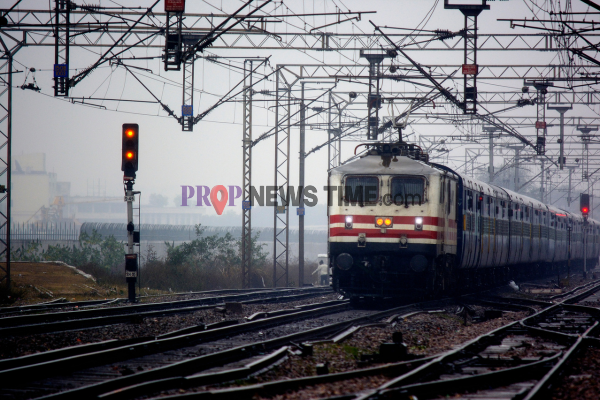
In a move aimed at enhancing connectivity and driving economic growth in Jammu and Kashmir, Prime Minister Narendra Modi inaugurated the Jammu railway division and highlighted its transformative potential for the region's infrastructure. Complementing this development, a direct train service connecting New Delhi and Srinagar is set to commence soon, providing travellers with a seamless and efficient experience. Advertisement


The newly established Jammu railway division is expected to benefit not only Jammu and Kashmir but also neighbouring regions such as Himachal Pradesh, Punjab, and Ladakh. The Prime Minister noted that integrating Jammu and Kashmir into the national railway network represents a significant milestone in improving Indian Railways' efficiency and passenger experience.
Among the standout projects is the Udhampur-Srinagar-Baramulla Rail Link, which features engineering marvels like the world's highest Chenab rail arch bridge and India's first cable-stayed rail bridge over the Anji river, both located in Reasi district. These infrastructure projects represent engineering excellence and are anticipated to boost socio-economic development in the region.
Lieutenant Governor Manoj Sinha expressed gratitude for these developments, describing Jammu's transformation into a premier railway hub and anticipating the arrival of Vande Bharat services in Kashmir. He emphasised the benefits of round-the-clock connectivity for the region, fostering unity and growth.
Former Chief Minister Omar Abdullah addressed concerns over potential economic shifts due to the rail connectivity, assuring that it would boost Jammu's economy through increased trade and tourism. He also emphasised that local recruitment within the new railway division would further benefit the region's residents.
Simultaneously, the Banihal bypass on the Jammu-Srinagar highway, a critical segment of a INR 16,000-crore four-laning project, is set to become operational. Constructed at a cost of INR 224.44 crore, the bypass features four viaducts and three culverts, offering a congestion-free route between Kharpora and the Navayuga Tunnel. It is located on the Ramban-Banihal section of NH-44. Designed to streamline traffic and reduce travel time, the bypass allows commuters to traverse the stretch in just seven minutes.
The broader four-laning initiative includes 10 tunnels totalling 21.5 kilometres and various viaducts and bridges, ensuring an all-weather route through challenging terrain. Additional projects, such as the Srinagar Semi Ring Road and upgrades to the Srinagar-Baramulla-Uri highway, are also underway, aiming to improve safety, reduce congestion, and boost connectivity in the Kashmir Valley.
The inauguration of the Jammu railway division, along with the launch of the direct train service and operationalisation of the Banihal bypass, signifies a transformative era for Jammu and Kashmir's connectivity and infrastructure. These projects promise to enhance mobility, boost trade and tourism, and create employment opportunities, contributing to the region's socio-economic progress.
Through modernising railway and road networks and addressing regional challenges, the government has laid a robust foundation for sustainable growth. As these initiatives unfold, Jammu and Kashmir is set to emerge as a key hub of connectivity, symbolising a united and progressive future for the region.

5th Jun, 2025

25th May, 2023

11th May, 2023

27th Apr, 2023
Advertisement








 Facebook
 Whatsapp
