Advertisement






The Gulf conflict has disrupted global supply chains, pushed...
REITs have changed the way commercial real estate is owned a...

What does it take to preserve a real estate legacy while bui...
What really powers the cloud? Behind every Google search, A...
A lot of what defines a home isn’t visible at handover. I...
An often overlooked aspect of any building is the vertical transportation systems it offers. It is seldom brought up when debating the merits and demerits of a property. Elevators, escalators, staircases, and moving walkways are some examples of vertical transportation found in residential and commercial buildings. As urban cities in India witness a rapid surge in high-rise constructions, it becomes crucial to understand the mechanics of vertical transportation systems within buildings. While educating users on basic practices-such as correctly operating lift buttons or avoiding regular lifts during a fire-would be ideal, the onus lies on builders and developers to implement essential safety measures.
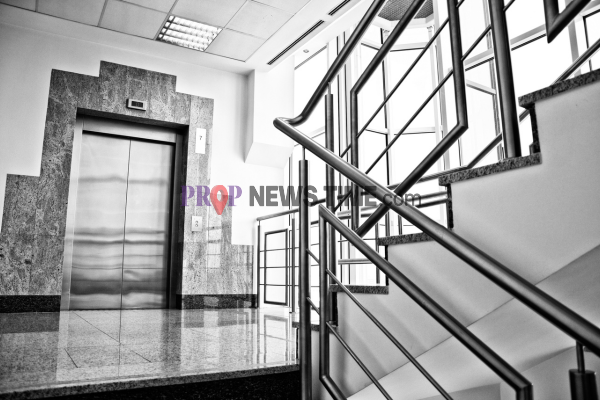
An often overlooked aspect of any building is the vertical transportation systems it offers. It is seldom brought up when debating the merits and demerits of a property, despite having the ability to significantly impact the quality of life enjoyed by its tenants. Vertical transportation refers to the systems within a building that carry people and goods from one floor to the other. Elevators, escalators, staircases, and moving walkways are some examples of vertical transportation found in residential and commercial buildings. Advertisement






For most, a conversation about the elevators in a building feels like much ado about nothing. However, in reality, elevators go a long way in enhancing the value of a property. If so, what should you be looking for as a buyer? Elevators in a building can be classified based on usage such as passenger, goods, freight or stretcher lifts. Alternatively, they can be classified based on the technology used such as hydraulic lifts, traction lifts or gear-less traction lifts.
Passenger elevators are used primarily to carry people. On average, a building should have one elevator for every four storeys. Further, depending on the usage and density of the building, the number and size of the lifts should be adjusted. Most passenger lifts range from a capacity of 4-5 people (450 kilograms) to 21-25 people (1,600+ kilograms). They should ideally be placed next to and in front of each other and within 50 meters of the lift lobby.
Freight, service or goods elevators are designed to transport heavy goods and long containers or stretchers in the case of hospitals. These elevators often have two doors at either end to facilitate easy loading and unloading of goods. Express elevators are a type of passenger elevators that are designed to service select floors or sections of the building. They are most commonly found in commercial high-rise buildings that experience heavy traffic.
Hydraulic elevators are supported by a piston at the bottom which pushes the elevator up. They are commonly used for low-rise buildings or to transport extremely heavy goods. Traction elevators run on a mechanism of ropes and pulleys connected to an electric motor above the elevator shaft. A counterweight makes them more efficient. Gearless traction elevators are the newest and most versatile of the lot. They occupy less space and eliminate the need for a dedicated machine room. Traction elevators are more energy efficient compared to hydraulic elevators and better suited for high-rise buildings with heavy usage.
While there isn't a widely accepted industry standard for elevator performance, a 30/60/90 rule can be applied. This rule suggests that a good elevator performance has a waiting time of 30 seconds, a travel time of 60 seconds, and a total journey time of 90 seconds. In heavy-use corporate buildings, it helps to have elevators with a common feed. An individual has to punch in the desired floor and the monitor guides them to the elevator that will take them there. Such innovations help reduce the wait time and improve efficiency. Alarm bells, a working intercom and other communication devices must be installed and properly functioning at all times.
Every elevator should ideally have an Automatic Rescue Device (ARD) and a lift backup system. In the case of power failure, the ARD automatically switches to battery power and runs the elevator to the nearest floor, allowing passengers to evacuate quickly. ARDs are best for areas with infrequent and short-duration power outages. However, in areas with frequent or longer power outages, a lift backup system is recommended.An ARD only runs the elevator for a short time, while a lift backup system can run the elevator for hours.
As urban cities in India witness a rapid surge in high-rise constructions, it becomes crucial to understand the mechanics and advantages of vertical transportation systems within buildings. While educating users on basic practices-such as correctly operating lift buttons or avoiding regular lifts during a fire-would be ideal, the onus lies on builders and developers to implement essential safety measures. In luxury developments, factors like elevator speed, wait times, and size significantly contribute to enhancing the overall appeal and value of the properties.
On the lighter side, I observe some people still do not know which button to press while calling for a lift. Should they press the button for directing the lift to come to them or press the button that indicates whether they want to go up or down.
Advertisement













 Facebook
 Whatsapp
