Advertisement










When should a housing society in Mumbai start considering re...
From GST on JDAs to SEBI’s REIT reclassification and the S...
Stay ahead in the world of real estate with our daily podcas...
Stay ahead in the world of real estate with our daily podcas...
Transit-Oriented Development (TOD) is transforming urban planning in India, addressing challenges of rapid urbanisation and environmental degradation. Rooted in principles of walkability, connectivity, and mixed land use, TOD integrates transport and urban planning to create high-density, pedestrian-friendly communities. Pioneering cities like Delhi, Ahmedabad, and Pune have adopted TOD to reduce vehicle dependency and enhance urban accessibility. Despite regulatory and financial challenges, TOD's economic, environmental, and social benefits are evident. With global models like Hong Kong's "Rail plus Property" providing inspiration, India's TOD initiatives aim to foster inclusive, sustainable urban growth amidst rising urbanisation.
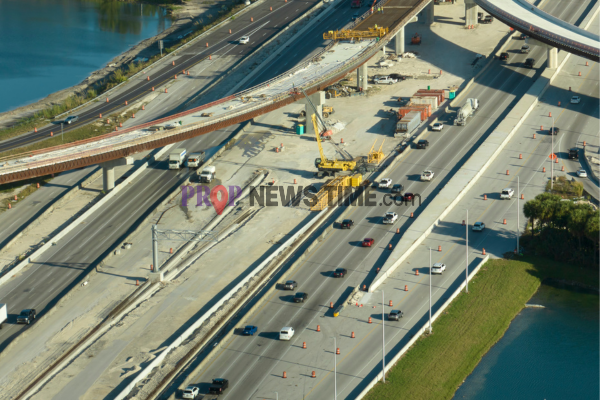
Transit-Oriented Development (TOD) has emerged as a critical urban planning strategy to address the challenges posed by rapid urbanisation, unplanned sprawl, and environmental degradation. Rooted in the principle of integrating land use with transport planning, TOD promotes the creation of high-density, mixed-use communities centered around high-quality public transportation systems. By prioritising accessibility, sustainability, and inclusivity, TOD aims to transform cities into efficient and livable spaces, reducing reliance on private vehicles and fostering environmental sustainability. Advertisement


The concept of TOD gained traction globally in the early 1990s, pioneered by urban planner Peter Calthorpe. He envisioned TOD as a community within a 10-minute walking distance of a transit stop, integrating residential, commercial, and recreational spaces into a cohesive urban fabric. The principles of TOD-such as walkability, connectivity, mixed land use, and increased density-have been widely recognised for their potential to revolutionise urban planning. These principles, encapsulated in frameworks like the "Eight Principles of TOD," emphasise creating compact, connected, and pedestrian-friendly neighborhoods that reduce environmental footprints while enhancing quality of life.
India's urbanisation trajectory underscores the urgency of adopting TOD. The country's urban population, which accounted for 31.6% of the total population in 2011, is projected to reach 600 million by 2030. This rapid urban expansion has exacerbated issues such as traffic congestion, air pollution, and inadequate infrastructure. Recognising these challenges, the Ministry of Housing and Urban Affairs (MoHUA) introduced the National Transit Oriented Development Policy in 2017, which serves as a blueprint for cities to align their growth with sustainable transport systems. The policy mandates higher densities, mixed land use, and equitable access to public transit, aiming to integrate mobility and urban planning seamlessly.
Several Indian states and cities have embraced TOD to reimagine their urban landscapes. In Delhi, the Delhi Development Authority (DDA) has implemented TOD policies to create high-density, mixed-use zones around metro stations. These initiatives aim to reduce traffic congestion and pollution while enhancing urban accessibility. Ahmedabad, a pioneer in sustainable urban planning, has incorporated TOD strategies into its Development Plan, focusing on transit corridors around the Bus Rapid Transit System (BRTS). Known as 'Janmarg,' Ahmedabad's BRTS exemplifies how TOD principles can promote public transport usage and reduce reliance on private vehicles. Pune has also adopted TOD frameworks, aligning its urban growth with transport networks to enhance connectivity and spur economic activity.
Despite the potential of TOD, its implementation in India is not without challenges. Regulatory barriers, including fragmented zoning laws and complex land acquisition processes, often hinder the seamless integration of transit and land use. Funding constraints pose another significant obstacle, particularly in Tier-2 and Tier-3 cities, where financial resources and institutional capacities are limited. Additionally, public awareness of TOD principles remains low, underscoring the need for extensive stakeholder engagement and community participation. Effective coordination among multiple government agencies is crucial to address these hurdles and ensure the successful execution of TOD projects.
The role of Public-Private Partnerships (PPPs) in advancing TOD cannot be overstated. PPPs facilitate resource mobilisation, risk-sharing, and the introduction of innovative solutions. In India, PPPs have been instrumental in financing and implementing TOD projects, as seen in initiatives like the Delhi Metro and the Hyderabad Metro. These partnerships highlight the importance of collaborative approaches in scaling TOD and achieving sustainable urban growth.
Globally, cities like Hong Kong, Tokyo, and Portland provide valuable lessons in TOD implementation. Hong Kong's "Rail plus Property" model, executed by the Mass Transit Railway (MTR) Corporation, integrates transit development with real estate, generating revenue and promoting sustainable urbanisation. Tokyo exemplifies efficient land use through its high-density, mixed-use developments around transit stations, reducing car dependency and enhancing urban livability. Portland, USA, has embraced TOD to create walkable, transit-friendly neighborhoods that prioritise public transport and community-centric development.
The benefits of TOD are evident across economic, environmental, and social dimensions. Economically, TOD enhances property values and stimulates local businesses by increasing foot traffic around transit hubs. Environmentally, it reduces greenhouse gas emissions by encouraging public transport use and minimising vehicle dependency. Socially, TOD fosters inclusive communities by providing equitable access to transport and creating vibrant, walkable urban spaces. These benefits underscore the transformative potential of TOD in addressing India's urban challenges.
In conclusion, Transit-Oriented Development represents a paradigm shift in urban planning, offering a sustainable pathway for India's cities to grow and thrive. By adhering to the principles of TOD and leveraging lessons from global examples, Indian states can create resilient and inclusive urban environments. The integration of public transport with mixed-use development not only enhances mobility but also contributes to economic vitality and environmental stewardship. As India's urbanisation continues to accelerate, TOD stands as a beacon of sustainable development, promising to reshape the nation's cities into hubs of connectivity, accessibility, and sustainability.

5th Jun, 2025

25th May, 2023

11th May, 2023

27th Apr, 2023
Advertisement








 Facebook
 Whatsapp
