Advertisement










Private equity has played a significant role in shaping Indi...
In today’s real estate landscape, fitness is often treated...
In this episode of Prop Personalities, we sit down with Hars...
Luxury real estate is one of the most talked-about segments ...
Welcome to Prop Personalities by Prop News Time - a podcast ...
The Patna Metro, a INR 13,365.77 crore project overseen by the Patna Metro Rail Corporation Limited (PMRCL), aims to modernise Bihar's capital with efficient and eco-friendly transit. Comprising two corridors spanning 32.91 km - the East-West Corridor (Danapur Cantonment to Khemni Chak) and North-South Corridor (Patna Junction to New ISBT) - the metro promises reduced congestion and shorter commutes. Funded by central and state governments, with JICA financing 60%, the project is set to launch by August 2025. This transformative initiative will boost connectivity, economic growth, and quality of life, marking Patna's leap toward sustainable urban development.
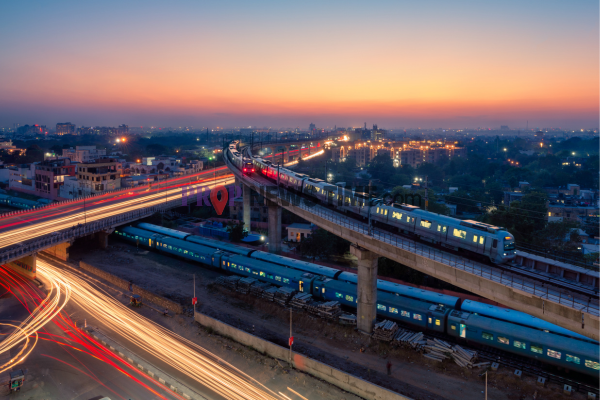
The Patna Metro is a transformative infrastructure project designed to revolutionize urban transportation in Bihar's capital city. With Patna's rapid population growth and increasing traffic congestion, the need for an efficient, sustainable, and modern public transport system has become critical. This ambitious metro project, overseen by the Patna Metro Rail Corporation Limited (PMRCL), promises to ease congestion, reduce travel time, and offer a reliable transit option to millions of residents. At an estimated cost of INR 13,365.77 crore, the Patna Metro represents not only a significant investment in infrastructure but also a commitment to the future development of the city. Advertisement


The Patna Metro project consists of two primary corridors: the East-West Corridor (Line 1) and the North-South Corridor (Line 2). These lines are designed to cover a combined length of 32.91 kilometres, with 16.86 kilometres dedicated to the East-West Corridor and 14.05 kilometres to the North-South Corridor. The corridors feature both elevated and underground sections, strategically planned to navigate through the city's densely populated areas. Line 1 connects Danapur Cantonment to Khemni Chak, while Line 2 links Patna Junction to New ISBT. Together, these corridors will serve vital parts of the city, ensuring accessibility to major residential, commercial, and educational hubs.
The journey of the Patna Metro began with the foundation stone being laid in February 2019 by Prime Minister Narendra Modi. Construction officially commenced in November 2020, marking a significant step towards addressing Patna's pressing need for improved public transportation. However, the project has faced its share of challenges, including delays related to land acquisition, coordination among various agencies, and the complexities of urban construction. Despite these hurdles, the project has steadily progressed, with notable milestones such as the tunnel breakthrough at the Patna University metro station achieved in March 2024.
Financing for the Patna Metro has been a collaborative effort. The project is funded through contributions from both the Government of India and the Government of Bihar, each covering 20% of the cost. The remaining 60% is financed by the Japan International Cooperation Agency (JICA), which has extended an official development assistance loan amounting to approximately INR 5,521 crore. This financial structure reflects a strategic approach to managing the significant investment required for such a large-scale project.
In addition to the metro system, Patna is also developing complementary infrastructure to support urban mobility. A double-decker flyover, with a budget of INR 422 crore, is under construction to further alleviate road congestion. This flyover, designed to connect key areas of the city, will integrate seamlessly with the metro network, creating a comprehensive urban transport solution.
The Patna Metro is poised to bring several benefits to the city. Once operational, the metro will significantly reduce travel time for commuters. For example, the journey between Malahi Pakri and Bairiya Bus Stand, which currently takes over 45 minutes by road, will be completed in just 15 minutes via the metro. This reduction in travel time will improve productivity, ease daily commutes, and enhance the overall quality of life for Patna's residents.
The first phase of the Patna Metro is expected to be completed by August 15, 2025, aligning with the government's strategic goals for infrastructure development. Trial runs are anticipated to begin in early 2025, with full-fledged operations starting by the end of the year. This timeline reflects a focused effort by authorities to deliver the project on schedule, despite the challenges faced during construction.
Public anticipation for the Patna Metro is high, with many residents viewing it as a symbol of progress and modernization for Bihar. The metro system is expected to spur economic growth by improving connectivity, encouraging investments, and boosting real estate development along its corridors. As the city's infrastructure improves, Patna is likely to attract more businesses, professionals, and tourists, further enhancing its status as a key urban center in eastern India.
In conclusion, the Patna Metro is more than just a public transport project; it is a vision for the future of the city. By addressing traffic congestion, promoting sustainable transit, and improving urban infrastructure, the metro will play a pivotal role in transforming Patna into a modern, efficient, and vibrant city. The successful completion of this project will not only benefit the current generation but also lay the foundation for a more connected and prosperous future for the people of Patna.

5th Jun, 2025

25th May, 2023

11th May, 2023

27th Apr, 2023
Advertisement





 Facebook
 Whatsapp
