Advertisement




Private equity has played a significant role in shaping Indi...
In today’s real estate landscape, fitness is often treated...
In this episode of Prop Personalities, we sit down with Hars...
Luxury real estate is one of the most talked-about segments ...
Welcome to Prop Personalities by Prop News Time - a podcast ...
The High Court of Bombay at Goa has requested replies from the concerned authorities in response to a public interest litigation that challenges development permissions granted by the Town and Country Planning (TCP) Department in a private forest area in Salvador do Mundo. Architect Dean D'Cruz argues that the TCP Department misrepresented the private forest map and manipulated development plans, increasing the settlement area while reducing the forested land. D'Cruz is calling for the cancellation of permissions for residential villas and other constructions, citing the environmental risks, including soil erosion and landslides, posed by hill-cutting, which is prohibited under the TCP Act.
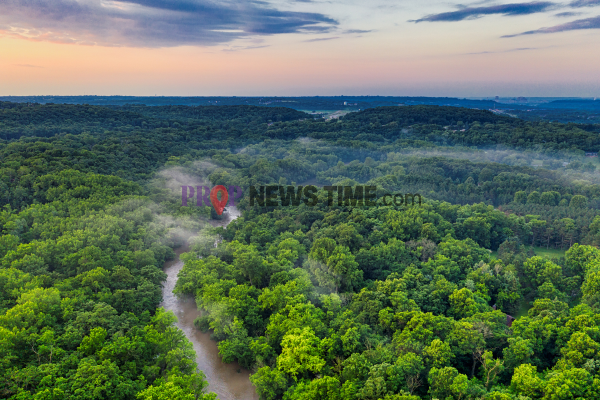
The High Court of Bombay at Goa has sought responses from the relevant government authorities regarding a public interest litigation (PIL) challenging the development permissions granted by the Town and Country Planning (TCP) Department in a private forest area in Salvador do Mundo. Advertisement


Dean D'Cruz, an architect and former member of the state-level committee for the preparation of the Regional Plan 2021, presented to the court that the TCP Department had failed to correctly overlay the private forest map provided by the Forest Department, thereby reducing the area designated as private forest while expanding the settlement zone.
D'Cruz also pointed out that the contour plan submitted for the development showed villas on slopes at a ratio of 1:4, which is not permitted under the TCP Act. He further argued that the submitted drawings appeared to have been manipulated, with sections indicating limited slopes being incorrectly excluded, thus not taking into account the actual steep slope areas.
The PIL highlighted that the permissions granted by the TCP Department overlapped with the private forest plan for Salvador do Mundo. D'Cruz is seeking the cancellation of the permissions issued for the construction of residential villas, row houses, and swimming pools, as well as the construction licence granted by the local panchayat.
D'Cruz argued that Section 17A of the TCP Act, 1974, which prohibits hill-cutting, was put in place to preserve the state's natural topography and prevent environmental degradation caused by unchecked development. He emphasised that hill-cutting is prohibited to avoid soil erosion and landslides, which can be triggered by destabilising the land, particularly in Goa's hilly regions prone to heavy rainfall.
The case before the High Court of Bombay at Goa underscores the need for careful consideration of environmental impacts when granting development permissions, particularly in ecologically sensitive areas like private forests. Dean D'Cruz's arguments highlight the potential risks of hill-cutting, which could lead to soil erosion and landslides, particularly in areas prone to heavy rainfall like Goa. The court's decision on this matter could set a precedent for stricter enforcement of the TCP Act, ensuring that development activities align with sustainable environmental practices and ecological preservation.

5th Jun, 2025

25th May, 2023

11th May, 2023

27th Apr, 2023
Advertisement





 Facebook
 Whatsapp
