Advertisement










Private equity has played a significant role in shaping Indi...
In today’s real estate landscape, fitness is often treated...
In this episode of Prop Personalities, we sit down with Hars...
Luxury real estate is one of the most talked-about segments ...
Welcome to Prop Personalities by Prop News Time - a podcast ...
Efforts to rejuvenate Indore's Kanh and Saraswati rivers are underway, involving a drone survey to map encroachments within 30 meters of their highest flood level (HFL). The phased project includes removing structures, constructing sewage treatment plants (STPs), and preparing a Detailed Project Report (DPR) to secure funding under the Namami Gange Programme. Notices were issued to 150 encroachments in Kabutarkhana and Machhi Bazaar, with relocations planned for eligible families to PMYA flats. The project also targets encroachments along six major nullahs spanning 57 km.
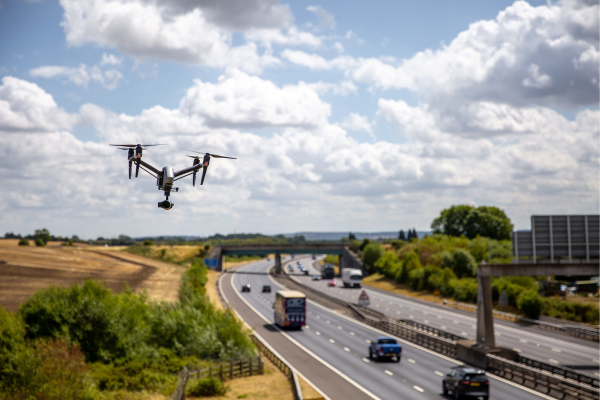
A drone survey will be carried out to document every instance of encroachment within 30 metres of the highest flood level (HFL) of the Kanh and Saraswati rivers. A detailed project report (DPR) will also be prepared to apply for funds under the 'Namami Gange Programme.' Based on a survey conducted five months ago, the IMC identified encroachments within 30 metres of the HFL along both rivers. The civic body plans to remove all structures within this limit in phases. Advertisement


In the first phase, the IMC had issued notices to approximately 150 structures in the Kabutarkhana and Machhi Bazaar areas in June, but the removal of these encroachments had not yet commenced. On November 21, Divisional Commissioner Deepak Singh remarked that the Kanh-Saraswati riverfront development project involves the participation of multiple agencies, including the administration, IMC, IDA, T&CP, and other relevant departments. He noted that this large-scale initiative aims to rejuvenate and protect both the Kanh and Saraswati rivers in Indore, which eventually merge with the Kshipra River. The meeting was attended by Collector Asheesh Singh, IMC Commissioner Shivam Verma, IDA CEO RP Ahirwar, ISCDL CEO Divyank Singh, and other senior officials from the concerned departments.
He mentioned that while construction of sewage treatment plants (STPs) was in progress at various locations to purify the water of the Kanh and Saraswati rivers, removing encroachments within 30 metre of the highest flood level (HFL) of both rivers would help restore their natural flow and lost glory. The Divisional Commissioner also stated that a drone survey would be conducted to precisely map every encroachment within the designated catchment areas of both rivers. Additionally, a Detailed Project Report (DPR) would be prepared to secure funding for the rejuvenation efforts under the Namami Gange Project.
He stated that the eligible families would be relocated to the PMYA flats. Following the removal of structures within 30 metre of the HFL of both rivers, there are plans to identify and remove constructions that have been built within nine metres of the HFL of six major nullahs, Bhamori (7.5 km), Palasia (8.5 km), Piliyakhal (12 km), Azad Nagar (4 km), Tulsi Nagar (9 km), and Narwal nullah (16 km), covering a total distance of approximately 57 km.
A senior IMC official stated that, in addition to instructions from the National Green Tribunal and the provisions of the Master Plan 2021, the rejuvenation and cleaning of the Kanh and Saraswati rivers are a priority in preparation for the Ujjain Simhastha 2028. The collector has directed revenue officials to update the land records, replacing the term 'nullah' with 'river' for the Kanh and Saraswati rivers. Taking advantage of this change, some colonies had been developed within 30 metre of the HFL of both rivers after securing the necessary permissions.
The ongoing efforts to rejuvenate the Kanh and Saraswati rivers reflect a comprehensive and collaborative approach involving multiple stakeholders. By addressing encroachments within critical flood zones and improving water quality through sewage treatment plants, the project aims to restore the rivers' ecological balance. The phased removal of encroachments, along with the proposed changes in land records, emphasises a long-term commitment to the rivers' preservation. As the project progresses, it will not only protect the rivers but also contribute to the overall development of Indore, ensuring a sustainable future for the city and its residents, especially in preparation for the Ujjain Simhastha 2028.

5th Jun, 2025

25th May, 2023

11th May, 2023

27th Apr, 2023
Advertisement





 Facebook
 Whatsapp
