Advertisement




Private equity has played a significant role in shaping Indi...
In today’s real estate landscape, fitness is often treated...
In this episode of Prop Personalities, we sit down with Hars...
Luxury real estate is one of the most talked-about segments ...
Welcome to Prop Personalities by Prop News Time - a podcast ...
Earlier this week, Chief Minister Eknath Shinde outlined several key developments, including the anticipated September launch of the first phase of Metro 3, connecting Bandra Kurla Complex with Aarey, with the second phase due in a year. He also committed to reducing Mumbai's slum population by building three million affordable homes, with MMRDA, CIDCO, and MHADA spearheading the effort alongside private developers. Shinde highlighted the role of increased housing supply in potentially lowering real estate prices and shared plans to unveil major infrastructure projects before the assembly elections, which are projected to occur in two phases in November.
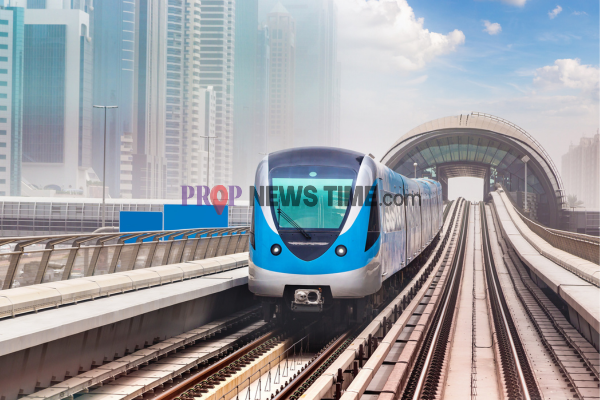
Earlier this week, Chief Minister Eknath Shinde announced that the first phase of Metro 3, which will connect Bandra Kurla Complex with Aarey, is expected to open by the end of September. He added that the second phase of the project would be operational within a year. Shinde also expressed his commitment to making Mumbai slum-free by constructing at least three million low-cost houses, noting that the state government has engaged various agencies to assist in this effort. He mentioned that, according to the NITI Aayog, increasing the supply of housing stock could help lower real estate prices. The state government, he said, is already developing policies to address this issue. Shinde shared these updates during an informal media interaction at his official residence, Varsha. Advertisement


The Chief Minister revealed that the state government has enlisted agencies such as the Mumbai Metropolitan Region Development Authority (MMRDA), the City and Industrial Development Corporation (CIDCO), and the Maharashtra Housing and Area Development Authority (MHADA) to address long-standing slum rehabilitation projects. These agencies are expected to collaborate with private developers for the construction work. He mentioned that the MMRDA is working on the redevelopment of Ramabai Nagar in Ghatkopar, where they aim to build around 17,000 residences to rehabilitate slum residents. He noted that residents have been given substantial rent payments to vacate their current residences. Additionally, other government agencies have been instructed to apply their housing development expertise to the projects.
Referencing the NITI Aayog's goal of building three million affordable houses in the Mumbai Metropolitan Region, Chief Minister Shinde expressed his commitment to making Mumbai slum-free. He recalled that Shiv Sena founder Balasaheb Thackeray had envisioned constructing four million houses to eliminate slums in Mumbai, and stated that efforts are underway to fulfill this vision. In the initial phase, Shinde reported that two lakh affordable houses are being constructed, with private builders receiving incentives such as a reduction in the premium from 15% to 5%. He also mentioned that the state government plans to inaugurate several infrastructure projects before the upcoming assembly elections.
In conclusion, Chief Minister Eknath Shinde's announcements reflect a broad and determined agenda aimed at transforming Mumbai's infrastructure and housing landscape. With the Metro 3 project set to enhance connectivity and extensive plans for affordable housing, Shinde's initiatives signal a proactive approach to urban development and slum abolition. The emphasis on collaboration with various agencies and private developers highlights a strategic effort to address both immediate and long-term challenges. As the assembly elections approach, Shinde's commitment to unveiling new projects and resolving seat-sharing issues suggests a dynamic and forward-thinking leadership dignified to impact Mumbai's future significantly.

5th Jun, 2025

25th May, 2023

11th May, 2023

27th Apr, 2023
Advertisement





 Facebook
 Whatsapp
