Advertisement






What really powers the cloud? Behind every Google search, A...
A lot of what defines a home isn’t visible at handover. I...
Private equity has played a significant role in shaping Indi...
Luxury real estate is one of the most talked-about segments ...
Airports play a much bigger role than just enabling travel -...
The Mumbai Metropolitan Region Development Authority (MMRDA) has approved the construction of seven foot over bridges (FOBs) along the 11-km Metro Line 9 corridor connecting Dahisar East and Mira-Bhayandar. Planned under the authority’s Multi-Modal Integration (MMI) initiative, the bridges aim to improve pedestrian safety, station accessibility and last-mile connectivity. The project will cover key locations along the Western Express Highway and Mira-Bhayandar Road and will include lifts, staircases and CCTV surveillance. With Metro Line 9 nearing completion, the pedestrian infrastructure is expected to support safer movement and smoother passenger dispersal across the corridor.
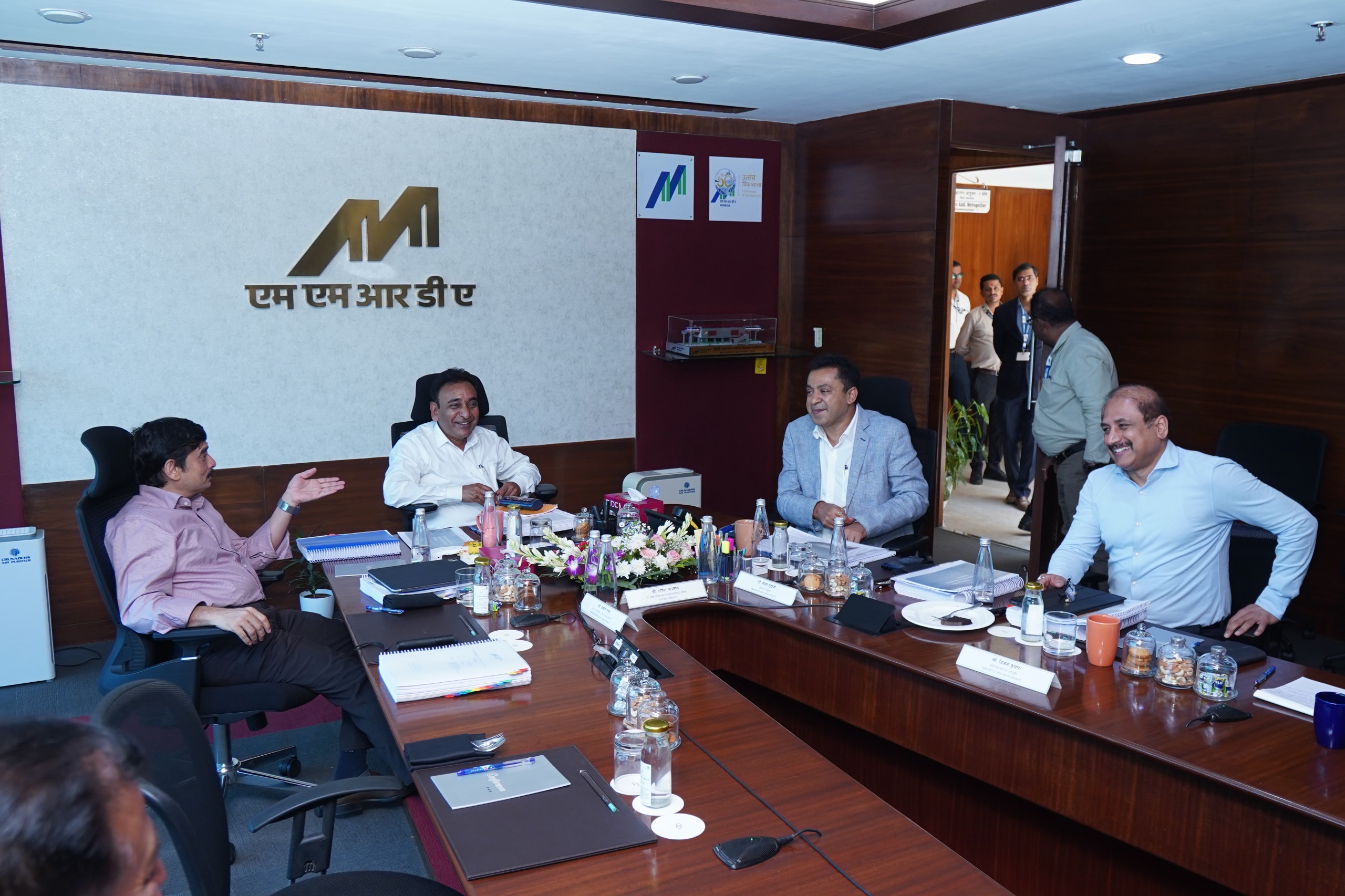
MMRDA has approved the construction of seven Foot Over Bridges (FOBs) along the Mumbai Metro Line 9 corridor between Dahisar East and Mira-Bhayandar as part of its Multi-Modal Integration (MMI) programme aimed at improving commuter accessibility, safety and last-mile connectivity.
The decision was approved during the 287th Executive Committee meeting of MMRDA, held recently under the leadership of Maharashtra Chief Minister Devendra Fadnavis, the chairmanship of Deputy Chief Minister and MMRDA Chairman Eknath Shinde, and the guidance of Chief Secretary Rajesh Kumar and Metropolitan Commissioner Dr. Sanjay Mukherjee. The proposed pedestrian infrastructure will serve the 11-km Metro Line 9 corridor, which comprises eight stations and is being developed to strengthen public transport connectivity in the northern suburbs and the Mira-Bhayandar region.
The initiative follows similar Multi-Modal Integration measures implemented on Metro Lines 2A and 7, where pedestrian access and station connectivity were enhanced through supporting infrastructure. For Metro Line 9, the focus is on creating seamless links between metro stations and surrounding neighbourhoods while improving commuter movement within station influence areas.
The seven FOBs have been planned across two major traffic corridors—the Western Express Highway and Mira-Bhayandar Road—where heavy vehicular movement and wide road stretches often make pedestrian crossings challenging. MMRDA stated that grade-separated crossings are necessary to improve safety and support efficient commuter dispersal from metro stations.
Two FOBs will be constructed on the Western Express Highway. The bridge at Dahisar Toll Naka will have a length of 145 metres, while the Miragaon FOB will span 87 metres.
Five additional FOBs are planned along Mira-Bhayandar Road. These include Kashigaon (92 metres), Shivar Garden (80 metres), Maxus Mall (83 metres), Veg Sagar Hotel (88 metres) and Sai Baba Nagar (80 metres).
All seven structures will have a standard width of three metres and will be equipped with staircases, lifts for universal accessibility and CCTV surveillance systems. The inclusion of lifts is expected to improve accessibility for senior citizens, persons with disabilities and passengers carrying luggage.
According to MMRDA, the proposed bridges will provide safer pedestrian crossings across busy roads, reduce accident risks, improve access to Metro Line 9 stations and facilitate smoother passenger movement during peak hours. The infrastructure is also expected to strengthen integration between metro services and other transport modes, supporting higher public transport usage through improved last-mile connectivity.
The authority noted that the FOBs could reduce dependence on signalised pedestrian crossings at busy intersections, allowing better traffic management and improved vehicular flow while maintaining pedestrian safety.
Metro Line 9 is an extension of Metro Line 7 and is being developed to improve connectivity between Mumbai and the rapidly growing Mira-Bhayandar region. The project is expected to play a key role in reducing travel time and easing congestion on road corridors that currently experience heavy commuter traffic.
With civil works on Metro Line 9 nearing completion and the first phase already operational since April this year, MMRDA has prioritised the timely execution of the pedestrian infrastructure so that commuters have access to safe crossing facilities from the beginning of full-scale metro operations.
To execute the project, MMRDA has appointed Speco Infrastructure in joint venture with PRS Infraprojects LLP for the construction of the seven FOBs under Package 1 of Metro Line 9. The contract has been awarded at a cost of approximately INR 82.09 crore. The contractor will be responsible for delivering the works in accordance with the approved Multi-Modal Integration plan.
Commenting on the project, Maharashtra Chief Minister Devendra Fadnavis stated that expanding metro infrastructure must be accompanied by safe and convenient access systems for commuters. He noted that Multi-Modal Integration is essential for connecting residential and commercial areas with metro stations and added that Maharashtra continues to witness rapid expansion of its metro network, with nearly 50 km of metro corridors being added annually.
Deputy Chief Minister and MMRDA Chairman Eknath Shinde said that the effectiveness of public transport depends not only on the transport infrastructure itself but also on the ease with which commuters can access it. He added that improving pedestrian safety and last-mile connectivity would encourage greater public transport adoption and support the development of a more connected metropolitan region.
MMRDA Metropolitan Commissioner Dr. Sanjay Mukherjee stated that Multi-Modal Integration remains a critical aspect of urban mobility planning. He said the proposed bridges have been designed to improve pedestrian movement, station accessibility and commuter dispersal while strengthening the region’s overall public transport network.
The construction of the seven FOBs forms part of MMRDA’s broader strategy to create a safer, more accessible and commuter-focused transport ecosystem across the Mumbai Metropolitan Region, while supporting the growing metro network through improved pedestrian infrastructure.
Source MMRDA

5th Jun, 2025

25th May, 2023

11th May, 2023

27th Apr, 2023
Advertisement









 Facebook
 Whatsapp
