Advertisement






What really powers the cloud? Behind every Google search, A...
A lot of what defines a home isn’t visible at handover. I...
Private equity has played a significant role in shaping Indi...
Luxury real estate is one of the most talked-about segments ...
Airports play a much bigger role than just enabling travel -...
Citizens and urban transport experts have opposed the proposed INR 12,200 crore Thane Integrated Ring Metro project, alleging serious planning deficiencies, route inefficiencies and environmental concerns. Activist groups and transport specialists have argued that the 29-km loop line suffers from flawed ridership assumptions, overlaps with existing and planned corridors, and bypasses densely populated areas that require better connectivity. They have also raised concerns over potential tree felling and demanded a halt to ongoing works until an independent review of the Detailed Project Report (DPR) is conducted.
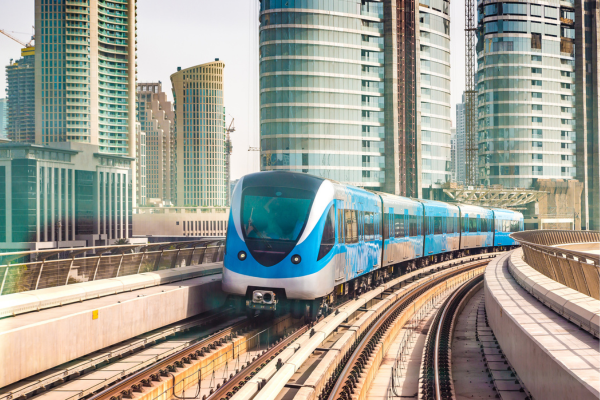
Citizens and urban transport experts have strongly opposed the proposed INR 12,200 crore Thane Integrated Ring Metro project, calling for a comprehensive review of its planning framework and questioning its long-term viability. The 29-km loop metro, designed to serve Thane city with 22 stations, has come under criticism from resident groups and transport analysts who argue that the alignment and design raise fundamental concerns over efficiency, environmental impact and public expenditure.
The opposition has been led by citizen collectives such as Citizens for Sustainable Transport (CST-Thane) and the Thane Green Collective, along with urban planning experts who have raised objections to the project’s Detailed Project Report (DPR). Stakeholders have argued that the proposed alignment creates route redundancies and fails to adequately serve densely populated residential clusters, thereby limiting its effectiveness as a mass transit solution.
Critics have also highlighted concerns regarding ridership projections, stating that anticipated passenger demand may not justify the scale of investment. They have described the project as financially inefficient and have urged the state government to pause implementation until an independent technical and environmental assessment is completed.
Environmental concerns have also emerged as a key point of contention, with activists warning that large-scale construction activity associated with the metro corridor could lead to significant tree loss and ecological disruption across Thane’s urban landscape. The groups have demanded that tree-felling permissions and ongoing preparatory work be suspended until a transparent review is undertaken.
The citizen groups have formally appealed to the Maharashtra government, including the Chief Minister, seeking suspension of the project’s execution and tendering activities. They have also called for public disclosure of the DPR to enable wider stakeholder consultation and independent scrutiny of planning assumptions.
Urban transport experts associated with the critique have stated that large infrastructure investments must prioritise integration with existing and upcoming metro corridors in the Mumbai Metropolitan Region rather than creating overlapping or parallel routes. They have argued that better alignment coordination could improve network efficiency and reduce duplication of capital expenditure.
Officials associated with the project, however, maintain that the metro is intended to address growing intra-city mobility requirements in Thane, which has witnessed rapid residential and commercial expansion in recent years. The 29-km circular corridor is expected to enhance connectivity across key growth nodes once operational.
The project remains under early-stage execution, with civil works and preparatory activities underway at select locations. Despite formal approvals and commencement of initial work, the project continues to face sustained public scrutiny over its planning design, environmental implications and cost-effectiveness.

5th Jun, 2025

25th May, 2023

11th May, 2023

27th Apr, 2023
Advertisement









 Facebook
 Whatsapp
