Advertisement






What really powers the cloud? Behind every Google search, A...
A lot of what defines a home isn’t visible at handover. I...
Private equity has played a significant role in shaping Indi...
Luxury real estate is one of the most talked-about segments ...
Airports play a much bigger role than just enabling travel -...
• Bhiwandi has received India’s first all-weather pedestrian subway, designed to provide uninterrupted connectivity and safer commuter movement throughout the year.
• The infrastructure is aimed at improving station access, reducing congestion and ensuring seamless pedestrian circulation during heavy rainfall and adverse weather conditions.
• The project forms part of broader efforts to modernise transport infrastructure and enhance commuter facilities across the Mumbai Metropolitan Region.
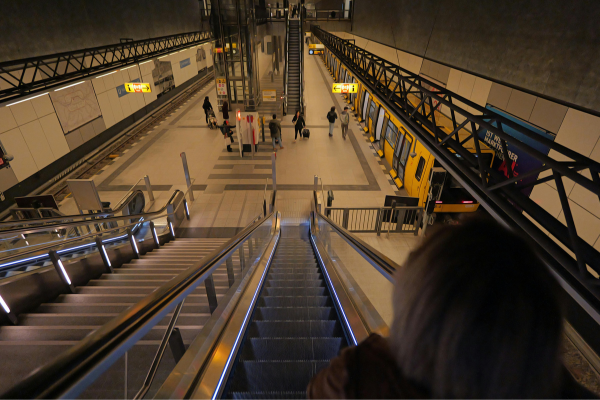
Bhiwandi has become home to India’s first all-weather pedestrian subway, marking a significant addition to the city’s transport infrastructure and commuter mobility network. The facility has been developed to provide safe, uninterrupted pedestrian access across key transit areas while addressing challenges posed by seasonal rainfall and increasing passenger volumes.
The new subway has been designed to remain operational throughout the year, including during the monsoon season when conventional pedestrian routes often face disruptions due to waterlogging and adverse weather conditions. Officials stated that the project is intended to improve commuter convenience, enhance safety and streamline passenger movement within the rapidly growing urban centre.
Bhiwandi has emerged as one of the Mumbai Metropolitan Region’s most important logistics and warehousing hubs, witnessing substantial growth in residential, industrial and commercial activity over the past decade. The increase in population and daily commuter traffic has created demand for upgraded transport infrastructure capable of supporting long-term urban expansion.
Transport planners have increasingly focused on improving pedestrian connectivity around major transit nodes as part of wider efforts to strengthen multimodal mobility. Dedicated pedestrian infrastructure is being viewed as a critical component of urban transport planning, particularly in densely populated areas where passenger movement often intersects with road traffic and freight operations.
Officials indicated that the all-weather design incorporates features aimed at ensuring uninterrupted access during periods of heavy rainfall, while also improving overall commuter experience. The facility is expected to reduce dependence on surface-level crossings and provide a safer alternative for daily passengers.
The project aligns with ongoing infrastructure investments across the Mumbai Metropolitan Region, where railway authorities, urban development agencies and transport planners are implementing a range of station improvement, connectivity and mobility enhancement initiatives. Several projects have focused on easing congestion, improving last-mile access and upgrading passenger amenities across suburban transport networks.
Urban infrastructure experts noted that weather-resilient pedestrian facilities are becoming increasingly important as cities adapt to growing commuter volumes and climate-related challenges. Such infrastructure can help improve accessibility while reducing disruptions to daily travel patterns during extreme weather events.
The Bhiwandi subway is expected to support safer and more efficient movement for commuters while contributing to broader efforts aimed at modernising transport infrastructure in the region. Authorities stated that pedestrian-focused projects would continue to play an important role in future urban mobility planning as cities seek to accommodate rising passenger demand and improve public transport accessibility.
Source Indian Railways

5th Jun, 2025

25th May, 2023

11th May, 2023

27th Apr, 2023
Advertisement









 Facebook
 Whatsapp
