Advertisement






The Gulf conflict has disrupted global supply chains, pushed...
REITs have changed the way commercial real estate is owned a...

What does it take to preserve a real estate legacy while bui...
What really powers the cloud? Behind every Google search, A...
A lot of what defines a home isn’t visible at handover. I...
The National Capital Region Transport Corporation (NCRTC) plans to develop commercial and residential hubs along the Delhi-Meerut Namo Bharat corridor, utilizing 90+ hectares of land across Duhai, Modipuram, Ghaziabad, and Meerut. The project includes malls, office spaces, rental housing, and hospitals, aligning with Transit-Oriented Development (TOD) principles. A Project Management Unit (PMU) will oversee execution. With the corridor's 82-km stretch set for full completion by 2025, NCRTC aims to boost real estate, improve mobility, and generate non-fare revenue, following global models like Hong Kong's MTR and Singapore's MRT.
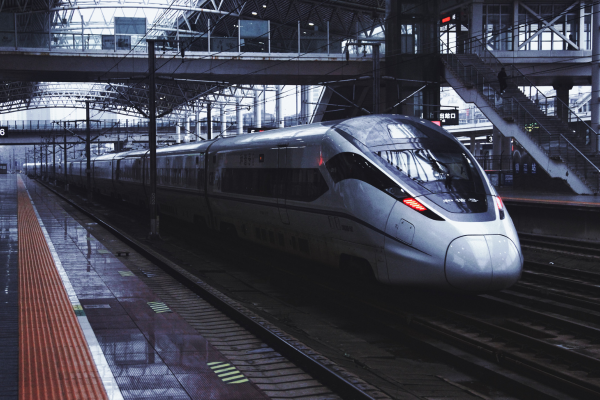
The National Capital Region Transport Corporation (NCRTC) is making strides toward developing key commercial, residential, and service hubs along the Delhi-Meerut Namo Bharat corridor. This initiative is aimed at monetizing strategically located land parcels and generating non-fare revenue while improving urban infrastructure for the benefit of both commuters and the surrounding communities. Advertisement






As part of this effort, NCRTC has identified several key land parcels for development, including large plots in Ghaziabad, Duhai Depot, Bhaisali (Meerut), and Modipuram Depot. The Ghaziabad plot spans around 2.4 hectares, while the Duhai Depot, Bhaisali, and Modipuram plots cover approximately 31, 9.7, and 31 hectares, respectively. Additionally, smaller land parcels across key stations like Sarai Kale Khan, New Ashok Nagar, Anand Vihar, Guldhar, Duhai, Muradnagar, Modinagar South and North, Meerut South, Shatabdi Nagar, and Modipuram, totaling around 16 hectares, have also been earmarked for development.
The identified plots are slated for transformation into vibrant mixed-use developments, including commercial spaces such as malls and Retail-Dining-Entertainment (RDE) hubs, integrated parking facilities with office spaces, rental housing, studio apartments, hospitals, and even theme parks. These developments will not only cater to the growing demand for residential and commercial spaces but also provide vital community amenities that will enhance the quality of life for both residents and commuters. This ambitious development plan comes alongside the ongoing operation of the Namo Bharat train services, which currently run along a 55-kilometer stretch connecting New Ashok Nagar to Meerut South via eleven stations. The full 82-kilometer corridor is expected to be completed by the end of 2025.
The Namo Bharat corridor, India's first high-speed regional transit system, is poised to transform urban mobility in the National Capital Region (NCR). To ensure that these developments are sustainable and aligned with modern urban planning principles, NCRTC plans to integrate them with Transit-Oriented Development (TOD) strategies. TOD focuses on creating high-density, mixed-use areas within walking distance of transit stations, which helps reduce congestion, promotes public transport, and curbs unplanned urban sprawl. The World Bank has recognized NCRTC's TOD model as a global best practice in sustainable urban planning.
To oversee the successful execution of these development projects, NCRTC is setting up a Project Management Unit (PMU). This unit will play a critical role in the strategic planning, market research, and transaction advisory required for the successful implementation of the property development initiatives. The selected consultants will be tasked with conducting market studies, preparing business plans, and facilitating the selection of developers. They will also ensure smooth coordination with stakeholders, monitor progress, and provide guidance on contract execution. The PMU's goal will be to optimize land utilization, drive financial viability, and ensure that these projects benefit not only the real estate market but also the broader community by improving connectivity and creating new employment opportunities.
Looking at global examples, the integration of transit systems with urban development has already shown promising results in several cities. Hong Kong, for instance, has successfully incorporated Transit-Oriented Development through its MTR system, which blends rail services with commercial developments to create a financially sustainable transit model and vibrant urban spaces. Similarly, Singapore's focus on building high-density neighborhoods around MRT stations has led to efficient use of public transport and reduced car dependency. In Portland, USA, the emphasis on walkable neighborhoods and the preservation of green spaces around transit hubs has created a better quality of life while promoting sustainable transport options.
In conclusion, NCRTC's development strategy for the Namo Bharat corridor is not only a major step towards modernizing urban infrastructure in the NCR but also a testament to the growing importance of Transit-Oriented Development in ensuring sustainable, connected, and vibrant cities. By capitalizing on the land along the corridor, the project promises to improve mobility, stimulate economic activity, and provide a much-needed boost to the region's real estate market, benefiting both residents and businesses alike.
Advertisement













 Facebook
 Whatsapp
