Advertisement






What really powers the cloud? Behind every Google search, A...
A lot of what defines a home isn’t visible at handover. I...
Private equity has played a significant role in shaping Indi...
Luxury real estate is one of the most talked-about segments ...
Airports play a much bigger role than just enabling travel -...
• DoLR and ADB held discussions on strengthening land governance, digital land records and watershed management in India.
• Talks focused on technical assistance, policy support and knowledge sharing to improve land administration systems.
• Government highlighted progress under Digital India Land Records Modernisation Programme (DILRMP), with near-complete digitisation of Records of Rights in several states and Union Territories.
• Around 66% of agricultural land parcels have been assigned Unique Land Parcel Identification Numbers (ULPINs), also known as “Bhu-Aadhaar”.
• Both sides discussed future cooperation in climate resilience, geospatial systems and data-driven land management.
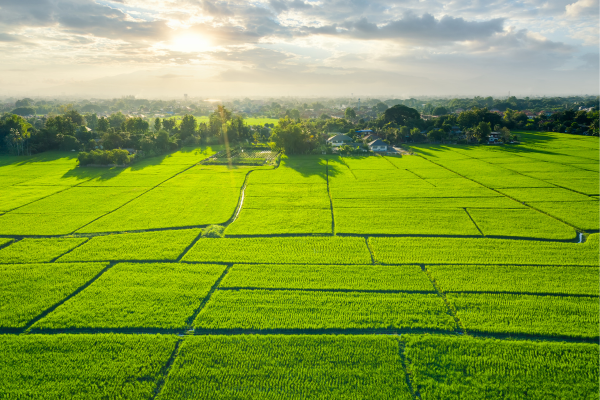
The Department of Land Resources (DoLR) and the Asian Development Bank (ADB) recently held discussions to explore collaboration in key areas such as land governance, digital land records and watershed management across India. Advertisement






The meeting took place between DoLR Secretary Narendra Bhooshan and an ADB delegation led by Country Director Mio Oka. The discussions focused on possible cooperation through technical assistance, policy support and knowledge sharing to strengthen land administration systems.
The DoLR Secretary highlighted that ongoing land governance reforms and digital initiatives are aimed at improving efficiency in land management and supporting inclusive economic growth. He noted that better land administration plays an important role in improving transparency and utilisation of land resources.
He also shared updates on the Digital India Land Records Modernisation Programme (DILRMP), stating that digitisation of Records of Rights has reached near saturation in several states and Union Territories. The programme, launched earlier to modernise outdated land records systems, has been a key step toward improving land record accessibility and reducing disputes.
The government is also preparing to roll out DILRMP 3.0, which is expected to focus on technology-driven improvements, real-time or dynamic updating of land records and better integration of land-related databases across departments.
Bhooshan further stated that nearly 66% of agricultural land parcels in the country have already been assigned Unique Land Parcel Identification Numbers (ULPINs), also referred to as “Bhu-Aadhaar”, which helps in creating a standardised land identification system.
On watershed development, he emphasised the need for climate-resilient land and water management practices to improve agricultural productivity and strengthen rural livelihoods. He also highlighted the need for innovative financing models, use of technology and convergence-based planning to scale up watershed programmes effectively.
The two sides also exchanged views on global best practices in land administration, including the use of geospatial systems, remote sensing and data-driven planning methods. These tools are increasingly being used worldwide to improve accuracy and efficiency in land-related governance.
ADB Country Director Mio Oka shared details of the bank’s ongoing projects in India and its work with various state governments. The ADB also highlighted its focus on digital agriculture, climate resilience, watershed management and institutional capacity building, and showed interest in further cooperation with DoLR.
India has been steadily pushing land record reforms since the early 2000s, with programmes like DILRMP forming the backbone of digitisation efforts. The proposed next phase, DILRMP 3.0, is expected to further strengthen this framework by improving data integration and technology adoption.
Both sides agreed on expanding future cooperation through structured technical assistance, policy engagement and capacity-building initiatives aimed at improving long-term land governance and watershed management systems in the country.
Source PTI

5th Jun, 2025

25th May, 2023

11th May, 2023

27th Apr, 2023
Advertisement









 Facebook
 Whatsapp
