Advertisement






What really powers the cloud? Behind every Google search, A...
A lot of what defines a home isn’t visible at handover. I...
Private equity has played a significant role in shaping Indi...
Luxury real estate is one of the most talked-about segments ...
Airports play a much bigger role than just enabling travel -...
The Andhra Pradesh Capital Region Development Authority (APCRDA) recently conducted a workshop focused on developing Amaravati as an accessible and inclusive capital city. The session brought together more than 80 architects, planners, engineers, consultants, accessibility experts and government officials to discuss universal design, inclusive infrastructure and barrier-free urban planning. Experts from institutions including LV Prasad Eye Institute, Surbana Jurong, DP Architects Singapore and Ekansh Trust shared global practices and practical solutions for accessible public spaces. The workshop also included an access audit exercise and discussions on creating equitable urban systems for people of all ages and abilities.
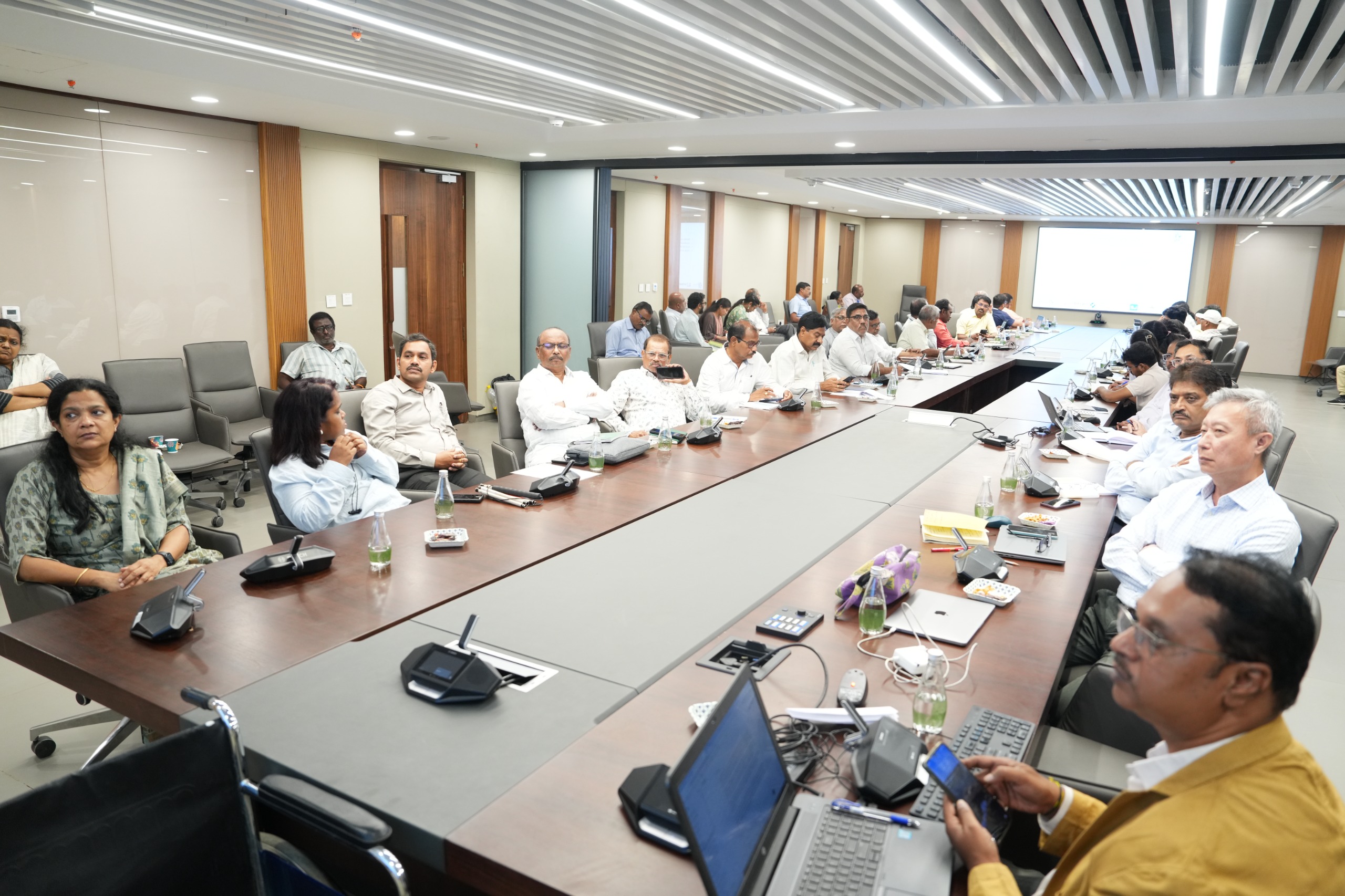
The Andhra Pradesh Capital Region Development Authority (APCRDA) recently organized a workshop on developing Amaravati as a model city for accessibility and inclusion at its project office in Amaravati. More than 80 architects, planners, engineers, consultants, accessibility experts, institutional representatives and government officials participated in the discussions focused on inclusive urban development. Advertisement






The workshop aimed to integrate accessibility, inclusivity and universal design principles into the planning framework of Amaravati as the state continues to develop its proposed capital city infrastructure. Commissioner of APCRDA, Shri V. Vijay Rama Raju, IAS, said the city’s public infrastructure should ensure dignity, equal opportunity and easy access for citizens across all age groups and abilities.
Sandeep Dixit, Chief Architect at APCRDA, told participants that accessibility should not be treated only as a compliance requirement but as an essential part of sustainable and people-focused urban development. He stressed that inclusive planning principles must be incorporated from the initial design stage itself to avoid future barriers in public spaces and infrastructure.
The workshop included presentations and discussions by experts from organizations such as LV Prasad Eye Institute, Surbana Jurong, DP Architects Singapore, The Urbanizer and Ekansh Trust. Sessions covered topics including inclusive zoning regulations for Amaravati, barrier-free infrastructure, accessible mobility systems, international best practices in inclusive urban design and accessibility audit frameworks.
Representatives from LV Prasad Eye Institute, including Dr. Beula Christy, Associate Director and Head of Services at the Institute for Vision Rehabilitation, along with Associate Director Kiran Kumar, highlighted the need to integrate accessibility measures into public infrastructure and urban systems. They said accessible environments help create greater independence and equal opportunities for persons with disabilities.
Aishwarya TV, Co-Founder of Grailmaker Innovations, shared her personal experiences as a visually impaired individual and explained the challenges faced while navigating inaccessible urban environments. She also demonstrated “Spacefelt,” a smartphone-based assistive application designed to help visually impaired individuals navigate public spaces independently using QR code-enabled audio descriptions.
Anita Iyer Narayan, Founder and Managing Trustee of Ekansh Trust and a consultant in accessibility and diversity, equity and inclusion, spoke about how accessibility directly impacts independence, dignity and quality of life. She emphasized the importance of embedding inclusive thinking into every stage of urban planning and infrastructure development.
Urban planning experts from Surbana Jurong and associated international planning teams, including Vamshee Kovuru, Aruna Majhi Samanta and Patrick Ng from Singapore, presented global case studies and planning approaches related to accessible street design, mobility systems and inclusive zoning regulations.
The design and planning teams from The Urbanizer and DP Architects Singapore also shared detailed presentations on accessibility standards, pilot approaches and urban design concepts that can support the development of inclusive public environments in Amaravati.
Aparna Anirudhan, architect and accessibility consultant, presented an accessibility audit framework using the Andhra Pradesh High Court as a case study. She discussed practical methods for evaluating accessibility levels in institutional buildings and public campuses.
Participants also took part in an interactive group discussion and an accessibility audit exercise conducted within the APCRDA building premises. The exercise was intended to help attendees understand practical accessibility challenges within built environments and identify possible improvements.
The workshop concluded with discussions on long-term strategies to position Amaravati as a benchmark city for accessible and inclusive urban development in India. APCRDA stated that it remains committed to developing a capital city that is equitable, accessible and welcoming for people of different age groups and abilities.

5th Jun, 2025

25th May, 2023

11th May, 2023

27th Apr, 2023
Advertisement









 Facebook
 Whatsapp
